Tag: Global Wealth

  • Indian Billionaires on the Global Stage: Power, Influence & Global Reach

    Indian Billionaires on the Global Stage: Power, Influence & Global Reach

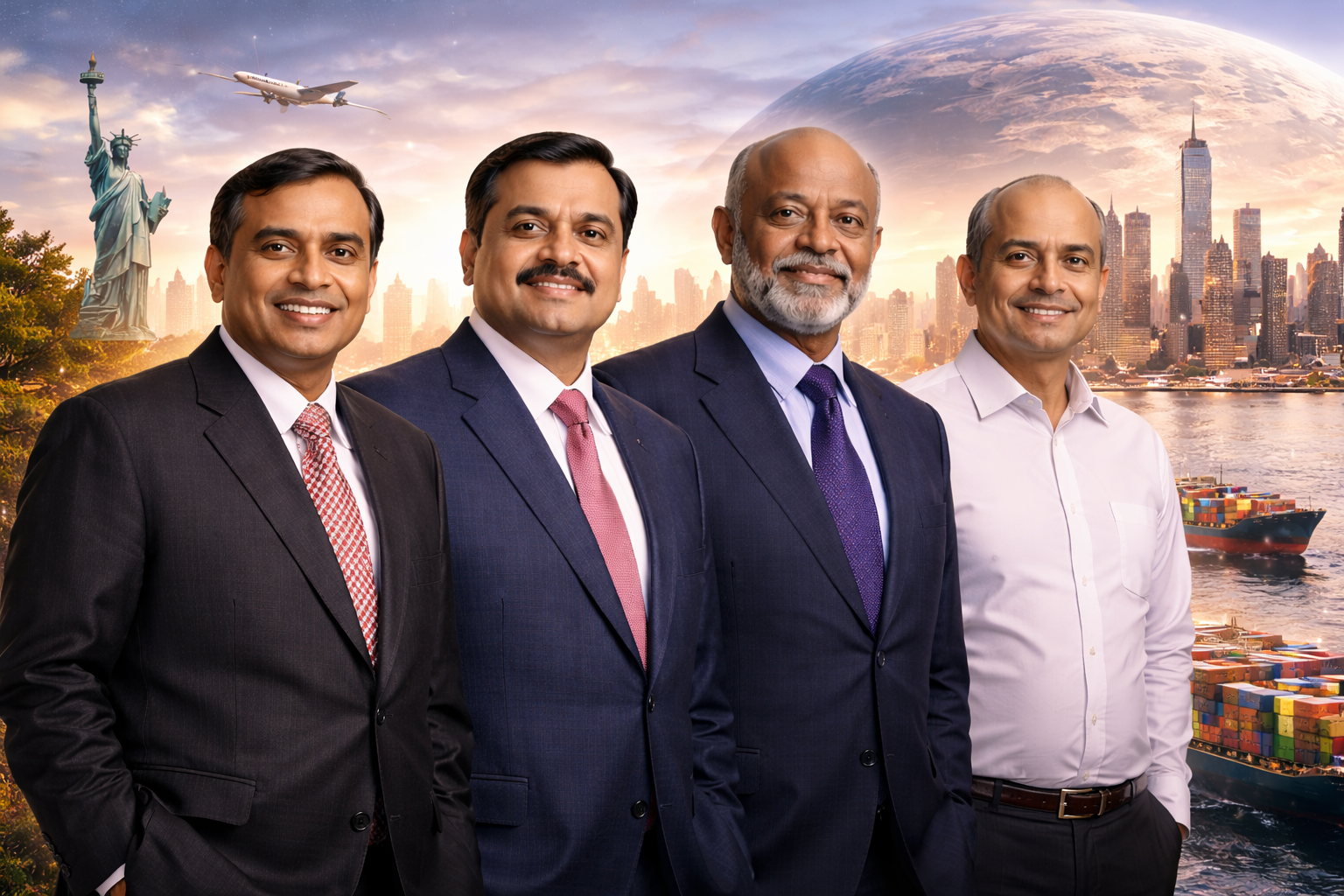
    Indian Billionaires on the Global Stage: Indian billionaires are no longer confined to domestic markets—they are now major players on the global stage, shaping industries, influencing geopolitics, and redefining how emerging-market wealth competes internationally. From energy and infrastructure to technology, retail, and manufacturing, India’s richest entrepreneurs are building global-scale enterprises that rival the world’s biggest corporations.

    This rise reflects India’s growing economic confidence, expanding capital markets, and its ability to produce business leaders with long-term vision and global ambition.

    India’s Billionaires as Global Power Brokers

    At the forefront of this transformation is Mukesh Ambani, whose business empire spans energy, telecom, retail, and digital platforms. Through large-scale investments and strategic partnerships with global giants, Ambani has positioned Indian enterprise at the centre of the world’s digital and consumer economy.

    Similarly, Gautam Adani has emerged as a global infrastructure heavyweight. With interests across ports, power, renewable energy, and logistics, Adani-led companies play a critical role in global supply chains and the clean energy transition, reinforcing India’s importance in global trade and sustainability.

    Technology, Knowledge & Global Reach

    India’s global influence is not limited to infrastructure and energy. Shiv Nadar represents India’s leadership in technology and IT services. His contributions helped establish India as a global technology hub, serving Fortune 500 companies and shaping digital transformation worldwide.

    Read more – Tech Billionaires Dominating the Future: Powering the Next Era of Innovation

    Retail and consumer markets also tell a powerful story. Radhakishan Damani has built one of the most efficient retail models globally, attracting international investor attention for its disciplined growth and strong governance.

    Why Indian Billionaires Matter Globally

    What sets Indian billionaires apart on the global stage is scale combined with cost efficiency. Their businesses often serve hundreds of millions of consumers while maintaining competitive pricing—an advantage increasingly valuable in a slowing global economy. Many are also investing heavily in renewable energy, digital infrastructure, and manufacturing, aligning with global priorities such as sustainability and supply-chain resilience.

    Indian billionaires are also becoming influential global investors, philanthropists, and policy influencers. Their decisions affect employment, innovation, and capital flows far beyond India’s borders.

    India’s Wealth, the World’s Attention

    As India continues its rise as a major economic power, its billionaires are becoming symbols of the country’s global aspirations. Their presence in international markets, partnerships with multinational corporations, and leadership in future-facing industries signal a clear shift—India is no longer following global business trends; it is helping set them.

    Indian billionaires on the global stage represent more than personal success stories. They embody India’s transformation into a confident, competitive, and influential force in the world economy. As global power centres diversify, India’s wealth creators are set to play an even bigger role in shaping the future of business and innovation worldwide.

  • Self-Made vs Inherited Billionaires: Two Paths to Extreme Wealth

    Self-Made vs Inherited Billionaires: Two Paths to Extreme Wealth

    Self-Made vs Inherited Billionaires: In the world of extreme wealth, billionaires generally fall into two broad categories: self-made billionaires and inherited billionaires. While both command enormous financial power and global influence, the journeys that lead them to the billionaire club are often dramatically different. This contrast reveals much about how modern economies reward innovation, opportunity, and legacy.

    Self-made billionaires are individuals who built their fortunes largely through their own ideas, risk-taking, and entrepreneurial drive. Many of today’s most prominent self-made billionaires rose through industries such as technology, finance, e-commerce, and manufacturing. By founding startups, scaling businesses globally, or investing strategically, they turned innovation into wealth. Their stories are often defined by disruption—challenging traditional industries, adopting new technologies, and moving faster than established competitors. This group is frequently celebrated for embodying meritocracy, ambition, and resilience.

    Read more – Youngest Billionaires in the World: The New Faces of Global Wealth

    Inherited billionaires, on the other hand, derive a significant portion of their wealth from family businesses, trusts, or long-established corporate empires. These fortunes are typically built over generations in sectors like retail, luxury goods, real estate, natural resources, and conglomerates. While inherited wealth may appear passive, many heirs play active roles in managing, modernizing, or expanding legacy businesses. Their challenge often lies in preservation—protecting wealth during economic shifts while adapting traditional enterprises to changing global markets.

    The distinction between self-made and inherited wealth is not always absolute. Many inherited billionaires grow their fortunes far beyond what they received by making bold investments or restructuring family businesses, while some self-made billionaires benefit from early access to education, networks, or capital. As a result, billionaire wealth today often reflects a blend of personal effort and inherited advantage rather than a simple binary.

    From a global perspective, self-made billionaires dominate technology-driven economies, particularly in the United States and parts of Asia, where startups and innovation ecosystems thrive. In contrast, inherited billionaires remain more common in Europe and emerging markets, where family-owned enterprises and dynastic wealth structures are deeply rooted. This geographic divide highlights how culture, regulation, and economic history shape paths to wealth.

    Ultimately, the debate between self-made vs inherited billionaires is less about which path is superior and more about understanding how wealth is created and sustained. Together, these two groups define the modern billionaire landscape—one driven by innovation and disruption, the other by legacy and continuity—both playing a powerful role in shaping the global economy.