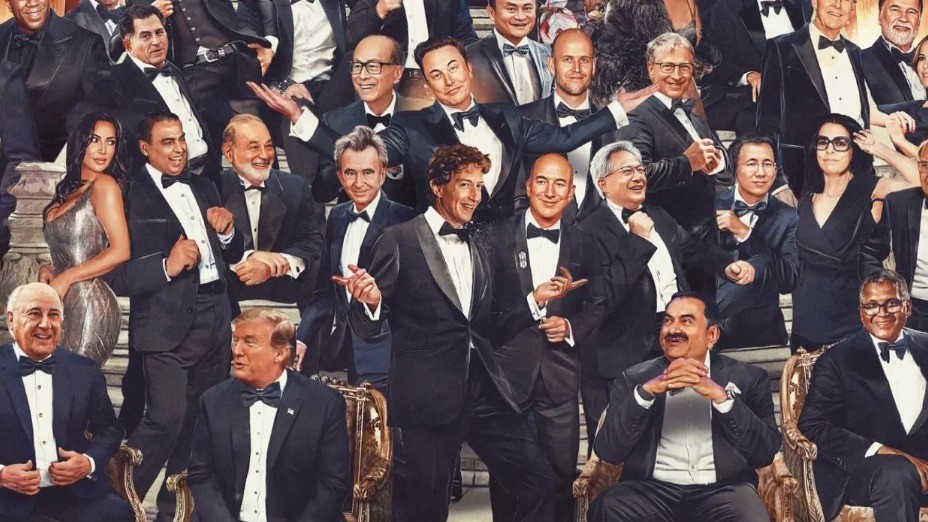
Wealth at the very top of the global economy is no longer static. In an era defined by real-time markets, instant information, and interconnected capital flows, billionaire fortunes can rise or fall by billions of dollars in a single trading session. This is precisely why the Forbes Real-Time Billionaires list has become one of the most closely watched financial rankings in the world.
Unlike the annual Forbes World’s Billionaires list, which captures net worth at a fixed moment in time, the real-time list updates continuously during market hours. It reflects stock price movements, currency fluctuations, and shifts in public company valuations, offering a living snapshot of who holds the greatest concentration of wealth on the planet at any given moment.
But the list is more than a scoreboard. It is a window into the industries, technologies, and economic forces shaping the modern world. The individuals at the top are not simply wealthy; they are deeply influential, controlling companies that affect how people communicate, shop, travel, invest, and consume information.
Below is a detailed, Forbes-style examination of the current top 10 richest individuals frequently appearing at the top of the Forbes Real-Time Billionaires ranking, followed by an analysis of what their dominance says about global wealth today.
Understanding the Forbes Real-Time Billionaires Methodology
Before examining the top 10, it is important to understand how Forbes calculates real-time wealth.
For publicly traded companies, Forbes updates billionaire net worths using real-time stock prices multiplied by known shareholdings. For private companies, valuations are adjusted daily using market indexes, comparable public firms, and industry performance. Assets such as real estate, cash, yachts, art, and private investments are also factored in, though they are updated less frequently.
The result is not a perfect measure of liquid wealth, but rather the most accurate publicly available estimate of a billionaire’s economic power at a given moment.
1. Elon Musk
Primary industries: Electric vehicles, space, artificial intelligence, advanced manufacturing
Country: United States
Elon Musk has spent much of the past decade oscillating between first and second place on the global wealth rankings, but he remains the most closely watched billionaire in the world. His fortune is anchored primarily in his ownership stakes in Tesla and SpaceX, with additional exposure to artificial intelligence, robotics, and other frontier technologies.
Musk’s wealth is highly volatile because it is closely tied to equity valuations rather than dividends or cash flow. When Tesla shares surge or SpaceX’s valuation increases, his net worth can climb dramatically. When markets turn risk-averse, it can fall just as quickly.
What distinguishes Musk from many of his peers is the breadth of his ambitions. His companies operate at the intersection of transportation, energy, aerospace, and AI, sectors that governments and investors alike see as strategically critical. As a result, his wealth is not only immense but deeply intertwined with the future direction of industrial and technological development.
2. Jeff Bezos
Primary industries: E-commerce, cloud computing, logistics
Country: United States
Jeff Bezos transformed retail by building Amazon into the dominant global e-commerce and cloud computing platform. Although he stepped down as CEO, Bezos remains one of Amazon’s largest shareholders, and the company continues to be the foundation of his fortune.
Amazon Web Services, in particular, has become one of the most profitable segments in the entire technology sector, supplying cloud infrastructure to governments, corporations, and startups around the world. This steady stream of high-margin revenue helps stabilize Bezos’s position among the top tier of global wealth holders.
Beyond Amazon, Bezos has invested heavily in aerospace through Blue Origin, media through ownership of The Washington Post, and a wide range of venture capital initiatives. His wealth reflects not just retail dominance, but control over critical digital infrastructure.
3. Bernard Arnault and Family
Primary industries: Luxury goods, fashion, consumer brands
Country: France
Bernard Arnault is the most prominent non-American billionaire at the very top of the Forbes rankings. As chairman and CEO of LVMH, the world’s largest luxury conglomerate, Arnault oversees a portfolio of more than 70 globally recognized brands, including Louis Vuitton, Dior, Fendi, Moët & Chandon, and Hennessy.
Unlike many tech billionaires, Arnault’s wealth is rooted in brand power, craftsmanship, and consumer aspiration. Luxury goods have proven remarkably resilient, even during periods of economic uncertainty, as high-net-worth consumers continue to spend on prestige products.
Arnault’s position highlights the enduring value of strong brands and global distribution networks. While technology dominates the upper reaches of the billionaire rankings, luxury remains one of the few non-tech sectors capable of producing generational wealth on this scale.
4. Larry Ellison
Primary industries: Enterprise software, cloud computing
Country: United States
Larry Ellison, the co-founder of Oracle, represents an earlier generation of technology wealth, but his relevance has not faded. Oracle remains a major force in enterprise software and cloud infrastructure, serving governments and corporations worldwide.
Ellison’s wealth is built on long-term ownership rather than constant innovation headlines. Oracle’s steady revenues, combined with Ellison’s disciplined approach to retaining equity, have kept him near the top of the rankings for decades.
In addition to technology, Ellison has invested heavily in real estate, including significant holdings in Hawaii, further diversifying his wealth beyond the tech sector.
5. Mark Zuckerberg
Primary industries: Social media, digital advertising, artificial intelligence
Country: United States
Mark Zuckerberg built one of the most influential companies in modern history by founding Facebook, now Meta Platforms. With billions of users across Facebook, Instagram, WhatsApp, and Messenger, Meta remains a cornerstone of the global digital advertising ecosystem.
Zuckerberg’s wealth has experienced sharp swings in recent years as Meta invested heavily in virtual reality and long-term AI initiatives. While these bets initially unsettled investors, renewed focus on efficiency and artificial intelligence has helped restore market confidence.
His position among the world’s richest underscores the continued economic power of attention, data, and global communication networks.
6. Larry Page
Primary industries: Internet services, artificial intelligence
Country: United States
Larry Page, co-founder of Google, helped create the foundation of the modern internet economy. Alphabet, Google’s parent company, continues to dominate online search and digital advertising while expanding into cloud computing, AI, and advanced research.
Page’s wealth is largely passive today, reflecting the enduring value of Google’s core businesses rather than day-to-day management. Alphabet’s investments in artificial intelligence, including large-scale language models and automation, ensure that Page’s fortune remains closely linked to the future of computing.
7. Sergey Brin
Primary industries: Internet services, artificial intelligence
Country: United States
Sergey Brin, Google’s other co-founder, shares much of his economic story with Larry Page. Together, they created one of the most profitable business models ever devised, turning search data into a global advertising engine.
Brin has become more involved in AI-related initiatives in recent years, reflecting the central role artificial intelligence now plays in Alphabet’s long-term strategy. His wealth highlights how early technological breakthroughs can compound over decades when paired with strong network effects.
8. Steve Ballmer
Primary industries: Software, sports ownership
Country: United States
Steve Ballmer amassed his fortune primarily through Microsoft, where he served as CEO during a period of enormous growth. Although he left the company years ago, Ballmer remains one of Microsoft’s largest individual shareholders.
His wealth has benefited from Microsoft’s resurgence as a cloud and AI powerhouse, demonstrating how legacy technology companies can reinvent themselves. Ballmer’s ownership of the Los Angeles Clippers also reflects the growing role of sports franchises as high-value investment assets.
9. Jensen Huang
Primary industries: Semiconductors, artificial intelligence hardware
Country: United States
Jensen Huang, co-founder and CEO of Nvidia, is one of the most significant beneficiaries of the global artificial intelligence boom. Nvidia’s graphics processing units have become essential infrastructure for AI training, data centers, and advanced computing.
Huang’s rise into the top tier of global wealth is a reminder that hardware remains just as critical as software in shaping technological revolutions. His fortune is closely tied to the continued expansion of AI across industries.
10. Michael Dell
Primary industries: Computer hardware, enterprise technology
Country: United States
Michael Dell built his fortune by revolutionizing the personal computer business and later transforming Dell Technologies into a major enterprise IT provider. His long-term ownership and strategic acquisitions have allowed him to retain control while navigating shifts in the technology landscape.
Dell’s presence in the top 10 reflects the enduring value of infrastructure and enterprise solutions in a world increasingly dependent on digital systems.
What the Top 10 Reveal About Global Wealth
The Forbes Real-Time Billionaires top 10 is overwhelmingly dominated by technology and technology-adjacent industries. Software, cloud computing, artificial intelligence, semiconductors, and digital platforms account for the majority of extreme wealth creation today.
At the same time, Bernard Arnault’s position demonstrates that consumer brands, when scaled globally and managed effectively, can rival even the largest tech fortunes.
Another striking feature is geographic concentration. Most of the world’s richest individuals are based in the United States, reflecting the depth of U.S. capital markets, innovation ecosystems, and investor appetite for growth.
Final Thoughts
The Forbes Real-Time Billionaires list is more than a ranking of individuals. It is a constantly updating map of where economic power resides and where it is heading. Each name in the top 10 represents not just personal success, but entire industries and technological shifts that shape everyday life for billions of people.
As markets evolve and new technologies emerge, the rankings will continue to change. But the underlying lesson remains the same: in the modern global economy, ownership of scalable platforms, intellectual property, and networks is the most powerful driver of extraordinary wealth.
Leave a Reply