Category: Leadership

  • Redefining Riches: Billionaires and the New Age of Philanthropy

    Redefining Riches: Billionaires and the New Age of Philanthropy

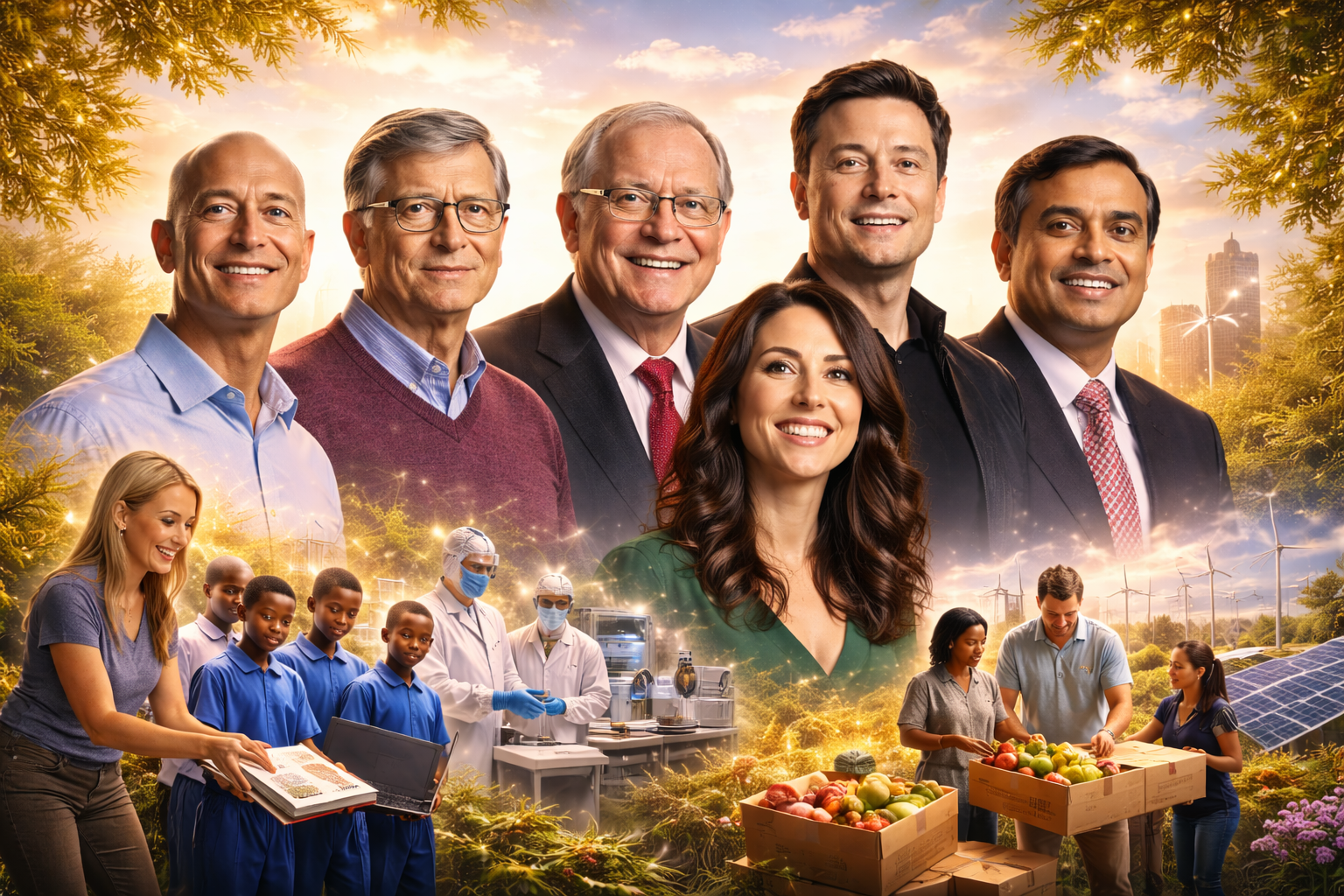
    As global inequality and social challenges grow more complex, philanthropy has become an increasingly important part of the billionaire narrative. For many of the world’s richest individuals, wealth is no longer just a measure of success—it is a tool for impact. Philanthropy shows how billionaires give back, reshaping education, healthcare, climate action, and social development on a global scale.

    From funding medical research to tackling climate change, billionaire philanthropy is influencing millions of lives across borders.

    The Shift from Charity to Strategic Philanthropy

    Modern philanthropy has evolved beyond traditional charity. Today’s billionaires often adopt a strategic, long-term approach, treating social problems with the same discipline used to build businesses. Instead of one-time donations, they invest in scalable solutions, measurable outcomes, and sustainable impact.

    This shift has led to the rise of large philanthropic foundations, impact investing, and partnerships with governments and global organisations, ensuring that funds create lasting change.

    Education and Knowledge Creation

    Education remains one of the most popular focus areas for billionaire philanthropy. Wealthy donors are funding universities, scholarships, digital learning platforms, and skill-development programmes. These efforts aim to expand access to quality education, reduce inequality, and prepare future generations for a technology-driven world.

    By supporting research institutions and innovation hubs, billionaire philanthropy is also accelerating scientific discovery and knowledge sharing.

    Read more – Youngest Billionaires in the World: The New Faces of Global Wealth

    Healthcare, Research, and Global Well-Being

    Healthcare is another major pillar of billionaire giving. Philanthropic funding has played a crucial role in vaccine development, disease prevention, hospital infrastructure, and global health initiatives. Billionaires often support cutting-edge medical research, especially in areas where public funding is limited or slow.

    In developing countries, philanthropic efforts help improve access to basic healthcare, clean water, and nutrition—saving lives and strengthening communities.

    Climate Change and Sustainability

    As climate risks intensify, many billionaires are directing their wealth toward environmental causes. Investments in renewable energy, conservation, carbon reduction, and sustainable agriculture are becoming central to modern philanthropy. These initiatives aim not only to protect the planet but also to drive innovation in green technologies.

    Climate-focused philanthropy reflects a growing recognition that economic success is deeply linked to environmental stability.

    Social Impact and Inclusive Growth

    Beyond education and health, billionaire philanthropy supports social justice, poverty alleviation, gender equality, and entrepreneurship. Many donors fund programmes that empower marginalised communities, promote financial inclusion, and create employment opportunities.

    Some billionaires are also rethinking wealth itself—pledging to give away a majority of their fortunes during their lifetime, reinforcing the idea that wealth carries social responsibility.

    Why Billionaire Philanthropy Matters

    The scale of billionaire giving allows rapid responses to global crises, from pandemics to natural disasters. While debates around accountability and influence continue, there is no denying the impact philanthropy can have when aligned with transparency, collaboration, and ethical intent.

    Tracking how billionaires give back offers insight into evolving values, global priorities, and the role private wealth plays in shaping public good.


  • Inside the Biggest Wealth Gainers and Losers of the Year

    Inside the Biggest Wealth Gainers and Losers of the Year

    Every year, global markets create dramatic shifts in personal fortunes. Stock market volatility, technology breakthroughs, geopolitical tensions, and changing consumer behaviour decide who wins big—and who takes a hit. The biggest wealth gainers and losers this year highlight how quickly fortunes can rise or fall in today’s interconnected global economy.

    From tech-driven rallies to sector-wide downturns, this year has been a clear reminder that wealth is dynamic, not static.

    The Biggest Wealth Gainers

    This year’s top wealth gainers largely benefited from technology-led growth, artificial intelligence optimism, and strong equity market rebounds. Investors and founders tied to high-growth sectors such as AI, cloud computing, electric vehicles, and digital platforms saw their net worth surge as markets rewarded innovation and scalability.

    Rising stock prices, renewed investor confidence, and strategic expansions helped propel fortunes upward. In several cases, even a single product breakthrough or earnings beat added billions to personal wealth almost overnight. These gains reflect how markets increasingly favour future-facing businesses over traditional models.

    The Biggest Wealth Losers

    On the other side, the biggest wealth losers were hit by market corrections, regulatory pressure, declining stock valuations, and global uncertainty. Sectors such as traditional energy, real estate, consumer goods, and highly leveraged businesses faced headwinds from rising interest rates, slowing demand, and geopolitical risks.

    Some high-profile losses were driven by sharp drops in share prices, while others resulted from long-term structural challenges rather than sudden shocks. This year underscored a harsh reality: even vast fortunes are vulnerable to market sentiment and macroeconomic forces.

    Read more: Self-Made vs Inherited Billionaires: Two Paths to Extreme Wealth

    What Drove the Wealth Swings

    The biggest drivers behind wealth gains and losses this year include inflation trends, central bank policies, technology adoption cycles, and investor risk appetite. Artificial intelligence emerged as a major wealth creator, while sectors exposed to debt, regulatory scrutiny, or slowing growth struggled to keep pace.

    Global events also played a critical role. Elections, conflicts, supply-chain disruptions, and energy price fluctuations all influenced market movements, directly impacting billionaire net worth across regions.

    Why These Shifts Matter

    Tracking the biggest wealth gainers and losers is about more than curiosity—it reveals where the global economy is heading. Wealth gains point to emerging opportunities and innovation-led growth, while losses signal sectors under pressure or undergoing transformation.

    For investors, policymakers, and businesses alike, these shifts offer valuable insights into future trends, risks, and opportunities in the global financial landscape.

  • Top Innovators Under 40: Young Leaders Shaping the Future of Technology and Business

    Top Innovators Under 40: Young Leaders Shaping the Future of Technology and Business

    Top Innovators Under 40: The world’s most transformative ideas are increasingly coming from leaders who haven’t yet turned 40. These innovators under 40 are redefining industries, challenging legacy systems, and building solutions for a rapidly changing global economy. From technology and artificial intelligence to healthcare, sustainability, and finance, this new generation of innovators is proving that age is no barrier to global impact.

    What sets innovators under 40 apart is their ability to combine technology, speed, and purpose. Having grown up in a digital-first world, they instinctively understand platforms, data, and global connectivity. Many of them are founders of startups that scale at unprecedented speed, while others are leading innovation within established organizations, driving change from the inside.

    In technology, young innovators are pushing the boundaries of artificial intelligence, automation, and software development. Their work is transforming how businesses operate, how data is used, and how decisions are made. In healthcare and biotechnology, innovators under 40 are accelerating breakthroughs in diagnostics, personalized medicine, and digital health—making care more accessible and efficient. Meanwhile, in climate and sustainability, young leaders are developing clean energy solutions, carbon reduction technologies, and circular economy models to address one of the world’s most urgent challenges.

    Read more: Self-Made vs Inherited Billionaires: Two Paths to Extreme Wealth

    Entrepreneurship plays a central role in the rise of innovators under 40. Many have built companies from the ground up, often starting with little more than an idea and a laptop. Venture capital, global networks, and digital platforms have enabled these innovators to reach international markets faster than ever before. At the same time, social impact has become a defining theme—profit and purpose increasingly go hand in hand.

    Beyond startups, innovators under 40 are influencing policy, education, and culture. They are reshaping how people work, learn, communicate, and consume information. Their leadership styles tend to emphasize agility, collaboration, and long-term thinking, reflecting the demands of a complex, interconnected world.

    Ultimately, innovators under 40 represent the future of global leadership. Their ideas are not just incremental improvements—they are bold reimaginings of what’s possible. As their influence continues to grow, these young visionaries will play a decisive role in shaping economies, societies, and technologies for decades to come.

  • Women Billionaires to Watch: Power, Influence, and the Future of Global Wealth

    Women Billionaires to Watch: Power, Influence, and the Future of Global Wealth

    Women Billionaires to Watch: Women billionaires are playing an increasingly influential role in shaping the global economy, breaking long-standing gender barriers across industries such as technology, finance, manufacturing, retail, and healthcare. Whether self-made entrepreneurs or leaders of legacy business empires, these women represent resilience, strategic leadership, and long-term vision. As global markets evolve, their decisions and investments are redefining what modern wealth and influence look like.

    1. Françoise Bettencourt Meyers

      Among the most closely watched names is Françoise Bettencourt Meyers, whose wealth is rooted in the global dominance of the beauty and cosmetics industry. Beyond inheritance, she has played a key role in guiding the company’s long-term strategy, blending tradition with innovation. Her influence highlights how consumer brands led by women continue to thrive worldwide.

      2. Julia Koch

      Another powerful figure is Julia Koch, whose fortune is tied to one of the largest privately held conglomerates in the world. As a major stakeholder, her growing public and philanthropic presence underscores how women billionaires are increasingly visible in areas beyond business, including education, healthcare, and social development.

      3. Rafaela Aponte-Diamant

      On the self-made front, Rafaela Aponte-Diamant stands out as one of the richest self-made women globally. Her journey from entrepreneur to shipping magnate reflects how women are building billion-dollar enterprises even in traditionally male-dominated industries like global logistics and maritime trade.

      4. MacKenzie Scott

      Technology and innovation also feature strongly among women billionaires to watch. MacKenzie Scott, though widely known for her association with the tech world, has emerged as a transformative figure through large-scale philanthropy. Her approach to wealth distribution is influencing how billionaire philanthropy is perceived and practised worldwide.

      Read More – Self-Made vs Inherited Billionaires: Two Paths to Extreme Wealth

      What sets women billionaires apart is not just their net worth, but the impact they create. Many are actively reshaping corporate governance, championing sustainability, investing in innovation, and supporting social causes at scale. Their leadership styles often emphasize long-term growth, inclusion, and adaptability—qualities increasingly vital in today’s volatile global economy.

      In the years ahead, women billionaires to watch will continue to gain prominence as role models and decision-makers on the world stage. Their rise signals a broader shift toward more diverse leadership in global wealth creation, proving that influence and economic power are no longer confined to traditional norms.