Category: Innovation

  • Election Funding in India: How Money Shapes Democracy

    Election Funding in India: How Money Shapes Democracy

    Election Funding in India: Democracy is built on the idea of equal political voice—but modern elections are expensive. Campaign rallies, digital outreach, advertising, data analytics, and grassroots mobilisation require significant funding.

    The challenge is not whether money is needed. The real question is: when does necessary funding become excessive influence?

    How Election Funding Shapes Indian Politics

    In India, election funding flows through:

    • Individual contributions
    • Corporate donations
    • Party funds
    • Regulated spending monitored by the Election Commission of India

    While candidates face spending caps, political parties and third-party campaign mechanisms create complex funding ecosystems that influence electoral competition.

    Read more: Business Tycoons in Politics: Power, Influence, and Policy in India

    The Power of Money in Elections

    Financial strength affects democracy in visible and invisible ways:

    1️⃣ Visibility Equals Viability

    More funds mean stronger advertising, greater digital presence, and larger public rallies.

    2️⃣ Media and Narrative Control

    Campaigns with deeper pockets can shape public discourse more effectively.

    3️⃣ Access to Strategy & Technology

    Professional consultants, survey agencies, and targeted digital campaigns require heavy investment.

    4️⃣ Unequal Competition

    Smaller or emerging political groups often struggle to match the spending power of well-funded rivals.

    Democracy at a Crossroads: Equality vs Influence

    At its core, democracy promises one person, one vote. But when funding disparities widen, political equality may narrow.

    Concerns:

    • Disproportionate donor access to policymakers
    • Policy priorities influenced by financial backers
    • Reduced public trust in electoral fairness

    Counter-Arguments:

    • Funding is essential for competitive politics
    • Private donations reduce dependence on state funding
    • Economic stakeholders have legitimate interests in policy outcomes

    The tension between participation and dominance defines the modern funding debate.

    Transparency: The Foundation of Trust

    Public trust depends not only on free elections but also on transparent financing. Stronger disclosure norms, donation caps, independent audits, and institutional oversight are often suggested reforms.

    Transparency does not eliminate money from politics—but it ensures accountability.

    The Future of Democratic Funding

    India’s democracy is vibrant, diverse, and dynamic. As election campaigns become increasingly sophisticated and digital, funding will remain central to political competition.

    The path forward lies in balance—ensuring that financial resources support democratic engagement without overpowering the public mandate.

    Because in a true democracy, influence should be earned through ideas—not purchased through wealth.


  • The Innovation Mindset: How Ideas Turn into Breakthroughs

    The Innovation Mindset: How Ideas Turn into Breakthroughs

    The Innovation Mindset: Innovation is not limited to technology labs or startup hubs—it begins with a way of thinking. The innovation mindset is the ability to question assumptions, embrace change, and continuously seek better solutions. In a world shaped by rapid disruption, this mindset has become a critical skill for individuals, organizations, and economies alike.

    At its core, the innovation mindset is driven by curiosity. Innovators ask “why,” “what if,” and “why not” more often than “why change.” They observe problems closely and see gaps as opportunities rather than obstacles. This curiosity fuels experimentation and opens the door to new ideas that challenge the status quo.

    Read more – Self-Made vs Inherited Billionaires: Two Paths to Extreme Wealth

    Another defining element is comfort with uncertainty. Innovation rarely follows a straight path. Those with an innovation mindset are willing to take calculated risks, test imperfect ideas, and learn from failure. Instead of viewing failure as a setback, they treat it as feedback—an essential step toward improvement and discovery.

    The innovation mindset also thrives on adaptability. Markets shift, technologies evolve, and customer needs change constantly. Innovators remain flexible, adjusting strategies and approaches as new information emerges. This agility allows them to stay relevant and competitive in fast-moving environments.

    Read more – Youngest Billionaires in the World: The New Faces of Global Wealth

    Collaboration plays a powerful role as well. Innovation is rarely a solo act. People with an innovation mindset value diverse perspectives, cross-disciplinary thinking, and open dialogue. By combining different skills and viewpoints, they create stronger, more resilient solutions.

    Finally, purpose anchors innovation. The most impactful ideas are driven by a desire to create value—whether economic, social, or environmental. When innovation is aligned with purpose, it moves beyond novelty and delivers meaningful, lasting impact.

    The innovation mindset is not about having the best idea—it’s about building the habits that allow great ideas to emerge and grow. In an era of constant change, cultivating this mindset is no longer optional; it is the foundation of progress, leadership, and future success.

  • Women Driving Innovation: Shaping the Future Through Leadership and Ideas

    Women Driving Innovation: Shaping the Future Through Leadership and Ideas

    Women Driving Innovation: Across industries and continents, women driving innovation are reshaping the future of technology, business, science, and social change. From startups and research labs to boardrooms and global organizations, women innovators are challenging traditional norms, introducing inclusive solutions, and proving that diversity is a powerful catalyst for progress.

    Innovation led by women is often rooted in problem-solving with purpose. Many female innovators focus on real-world challenges—healthcare access, climate change, financial inclusion, education, and digital equity. By combining empathy with technology and strategy, they create solutions that are not only scalable but also socially impactful.

    In technology and entrepreneurship, women are founding and leading companies in artificial intelligence, fintech, biotech, clean energy, and e-commerce. Despite facing barriers such as limited access to capital and representation, women entrepreneurs continue to build high-growth ventures and disrupt male-dominated industries. Their success is redefining what leadership looks like in the innovation economy.

    Women are also driving innovation within large organisations. As executives, scientists, and policymakers, they influence research priorities, corporate strategy, and public policy. Their leadership styles often emphasise collaboration, long-term thinking, and sustainability—qualities increasingly critical in a complex global environment.

    Read more – Self-Made vs Inherited Billionaires: Two Paths to Extreme Wealth

    Another key area where women drive innovation is science and healthcare. Female researchers and innovators are behind breakthroughs in medical technology, pharmaceuticals, and public health solutions. Their contributions are improving patient outcomes, advancing personalised medicine, and strengthening global health systems.

    The rise of women driving innovation is also shaping the future workforce. By mentoring, investing in, and inspiring the next generation, women leaders are building more inclusive innovation ecosystems. This ripple effect ensures that innovation benefits a broader segment of society and reflects diverse perspectives.

    Final Perspective

    Women driving innovation are not a trend—they are a force transforming the global economy. As barriers continue to fall and opportunities expand, their influence will only grow. The future of innovation is more inclusive, more resilient, and more impactful because women are helping lead it.

  • Corporate Innovation vs Startup Innovation: How Big Companies and Startups Build the Future

    Corporate Innovation vs Startup Innovation: How Big Companies and Startups Build the Future

    Corporate Innovation vs Startup Innovation: Innovation drives growth—but it doesn’t look the same everywhere. The debate around corporate innovation vs startup innovation highlights two very different approaches to creating new ideas, products, and markets. While large corporations innovate with scale, resources, and stability, startups innovate with speed, agility, and disruption. Understanding the difference between the two reveals how modern economies evolve—and why both models matter.

    How Corporate Innovation Works

    Corporate innovation typically happens within large, established organizations. These companies invest heavily in research and development, innovation labs, and long-term strategic initiatives. Their strength lies in scale, capital, data, and market access. When corporations innovate successfully, they can deploy new technologies globally almost instantly.

    However, corporate innovation often moves slowly. Complex hierarchies, regulatory requirements, and risk-averse cultures can limit experimentation. Innovation in large companies is usually incremental—focused on improving existing products, optimising processes, or expanding into adjacent markets rather than disrupting the core business.

    Read more – Self-Made vs Inherited Billionaires: Two Paths to Extreme Wealth

    How Startup Innovation Works

    Startup innovation thrives on speed, flexibility, and risk-taking. With small teams and fewer layers of decision-making, startups can test ideas rapidly, pivot quickly, and challenge established players. They often focus on solving a single problem exceptionally well, using technology to scale fast.

    Startups embrace uncertainty. Failure is treated as learning, not loss. This mindset allows startups to create breakthrough innovations that redefine industries—from fintech and e-commerce to AI and clean energy. The downside is vulnerability: limited funding, market access, and operational scale can restrict long-term survival.

    Key Differences in Approach

    The core difference between corporate innovation and startup innovation lies in risk tolerance and execution style. Corporations prioritize stability, brand protection, and predictable returns, while startups prioritize growth, experimentation, and disruption. Where corporations innovate to defend or extend market leadership, startups innovate to create entirely new markets or overturn existing ones.

    Read more – Youngest Billionaires in the World: The New Faces of Global Wealth

    Why Collaboration Is the Future

    Increasingly, the future of innovation lies in collaboration rather than competition. Corporations partner with startups through accelerators, acquisitions, and venture investments to inject agility into their systems. Startups benefit from corporate resources, global reach, and credibility. This blend of scale and speed is becoming the most powerful innovation model.

    The debate of corporate innovation vs startup innovation isn’t about which is better—it’s about understanding their strengths. Corporations excel at scaling innovation globally, while startups excel at creating it. Together, they form a complete innovation ecosystem that drives progress, disruption, and long-term economic growth.

  • From Idea to Impact: Where Vision Becomes Reality

    From Idea to Impact: Where Vision Becomes Reality

    From Idea to Impact: Every meaningful change the world has ever seen began as a fragile idea—unproven, uncertain, and often ignored. Yet history shows that progress doesn’t belong to the loudest voices or the biggest budgets; it belongs to those who can carry an idea forward until it creates real-world impact. The journey from idea to impact is where imagination meets execution—and where innovation truly comes alive.

    Ideas are born from curiosity and conviction. They emerge when someone questions the status quo, sees a gap others overlook, or imagines a better way of doing things. But ideas alone are not enough. In today’s fast-paced world, millions of ideas are generated every day. What sets transformative ideas apart is the courage to act on them and the discipline to refine them.

    The transition from idea to impact begins with problem-solving. Great innovators don’t chase trends—they solve real problems. They listen closely, observe deeply, and design solutions rooted in human needs. Technology becomes a tool, not the goal. Whether it’s improving healthcare access, reducing environmental harm, or simplifying everyday life, impactful ideas are grounded in purpose.

    Execution is where most ideas are tested—and where many fail. Turning vision into reality requires experimentation, resilience, and adaptability. Prototypes are built, assumptions are challenged, and failures become feedback. In the digital age, rapid iteration and data-driven decision-making allow innovators to evolve faster than ever before, transforming rough concepts into scalable solutions.

    Impact is achieved when innovation moves beyond intention and delivers measurable change. It’s visible when businesses grow sustainably, communities benefit meaningfully, and systems operate more efficiently. True impact is not defined by headlines or valuations—it is defined by lives improved, problems reduced, and futures reshaped.

    The journey from idea to impact is rarely linear. It demands patience, persistence, and the willingness to learn continuously. Yet it is this very journey that defines leaders, disruptors, and changemakers. Those who succeed don’t just create products or services—they create movements, mindsets, and momentum.

    In the end, from idea to impact is more than a process—it’s a philosophy. It’s the belief that bold thinking, when paired with purposeful action, can shape industries, influence societies, and change the world—one idea at a time.

  • Why India Is Emerging as the World’s Next Innovation Powerhouse

    Why India Is Emerging as the World’s Next Innovation Powerhouse

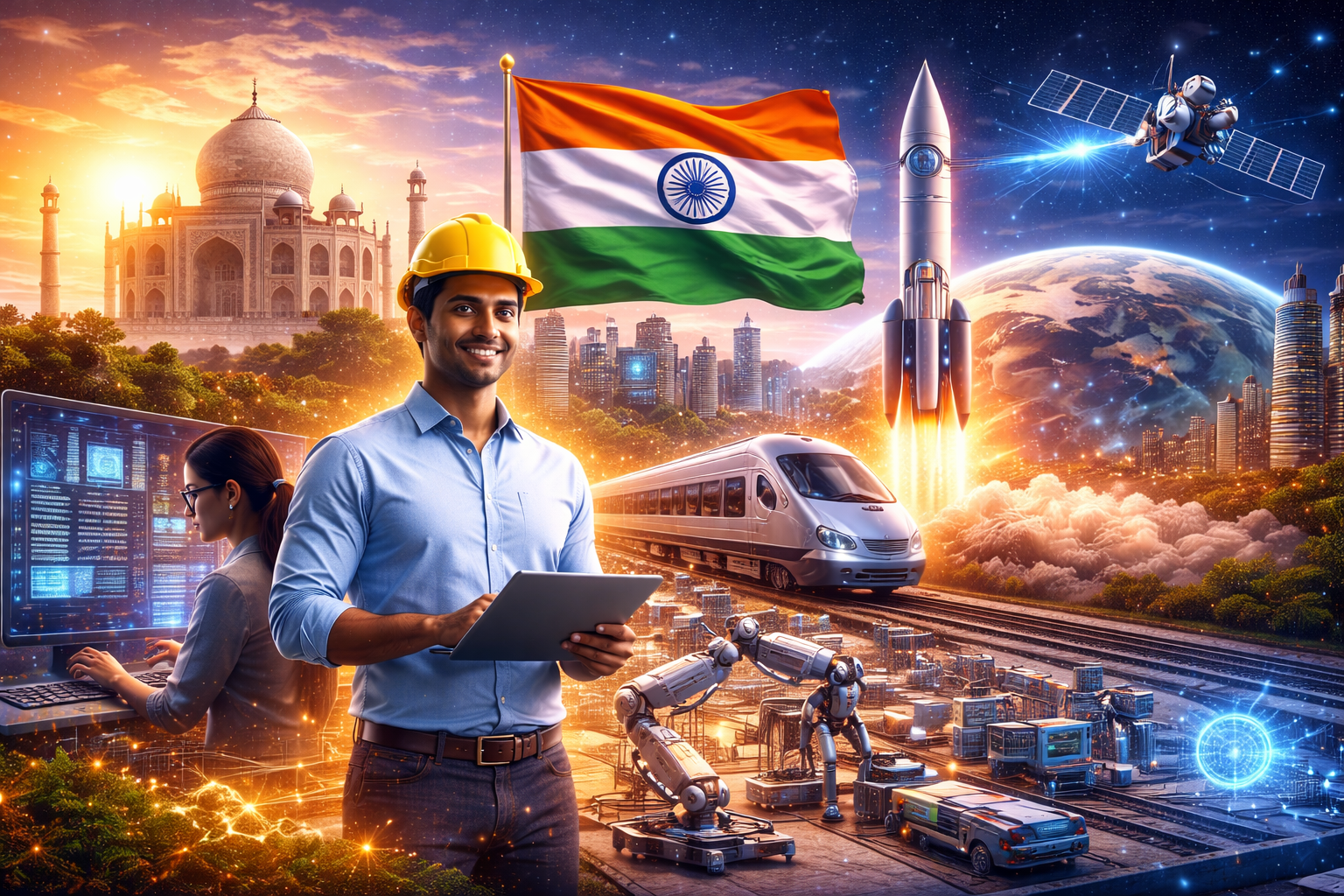
    India is rapidly emerging as one of the world’s most dynamic innovation hubs, positioning itself as the next global powerhouse of technology, entrepreneurship, and industrial growth. With a unique combination of a young workforce, digital adoption at scale, and strong policy support, India is no longer just a consumer market—it is becoming a global creator of ideas, solutions, and technologies.

    Over the past decade, India’s startup ecosystem has witnessed explosive growth. From fintech and e-commerce to artificial intelligence and deep tech, Indian startups are solving problems not just for domestic markets but for the world. The rise of unicorns across sectors highlights India’s ability to innovate at scale, driven by affordability, efficiency, and frugal engineering—often referred to as “innovation with impact.”

    Government-led initiatives have played a crucial role in accelerating this transformation. Programmes such as Digital India, Startup India, and Make in India have strengthened digital infrastructure, encouraged entrepreneurship, and boosted advanced manufacturing. These initiatives have helped India move up the global value chain, especially in electronics, renewable energy, defence manufacturing, and semiconductors.

    Technology has become the backbone of India’s innovation story. Widespread internet penetration, affordable data, and digital public infrastructure have enabled breakthroughs in digital payments, governance, healthcare, and education. India’s digital platforms are now studied globally as models for inclusive and scalable innovation, demonstrating how technology can reach billions efficiently.

    India is also making its mark in frontier sectors such as space technology, biotechnology, and clean energy. Low-cost space missions, advances in vaccine development, and rapid expansion of renewable energy capacity showcase India’s ability to compete with established global powers while maintaining cost efficiency. These achievements are reshaping global perceptions of India’s technological capabilities.

    Equally important is India’s demographic advantage. With one of the youngest populations in the world, the country is nurturing a generation of innovators, engineers, and entrepreneurs who are globally connected yet deeply aware of local challenges. This blend of global thinking and local problem-solving is driving innovations that are scalable, sustainable, and socially relevant.

    In the global economic landscape, innovation in India is no longer an emerging trend—it is a defining force. As investment flows increase and Indian companies expand internationally, the country is set to play a central role in shaping the future of technology, manufacturing, and digital economies.

    Final Perspective

    Innovation in India: The Next Global Powerhouse is not just a narrative—it is a reality unfolding in real time. With strong fundamentals, visionary leadership, and a culture of resilience and creativity, India is poised to become one of the most influential innovation-driven economies of the 21st century.

  • Breakthrough Technologies to Watch This Year: Innovations Shaping the Future

    Breakthrough Technologies to Watch This Year: Innovations Shaping the Future

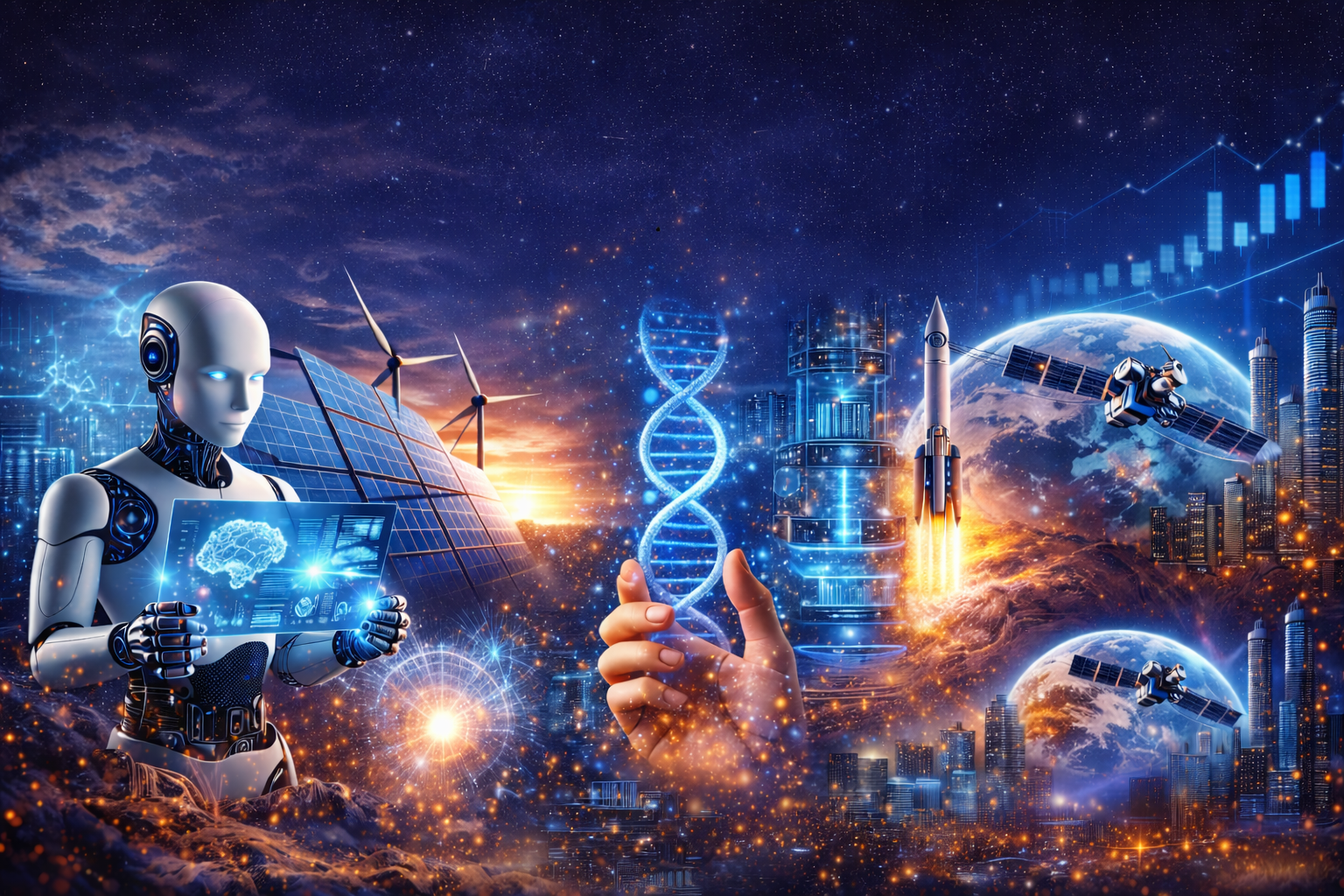
    Breakthrough Technologies to Watch This Year:This year is shaping up to be a defining moment for technological progress. From artificial intelligence and clean energy to biotechnology and space exploration, breakthrough technologies are rapidly moving from research labs into real-world applications. These innovations are not just improving efficiency—they are transforming industries, reshaping economies, and redefining how society functions.

    Artificial Intelligence Goes Mainstream

    Artificial Intelligence continues to be the most disruptive technology of the decade. This year, AI is moving beyond experimentation into large-scale adoption across healthcare, finance, education, and manufacturing. Generative AI, predictive analytics, and autonomous systems are enabling faster decision-making, cost reduction, and entirely new business models. As AI becomes more accessible, its impact on productivity and innovation is accelerating globally.

    Clean Energy & Next-Gen Batteries

    The push toward sustainability is driving major breakthroughs in renewable energy and energy storage. Advances in solar efficiency, wind technology, and next-generation batteries are making clean energy more reliable and affordable. Solid-state batteries and long-duration energy storage systems are expected to transform electric vehicles and power grids, supporting the global transition to low-carbon economies.

    Biotechnology & Precision Medicine

    Biotechnology is entering a golden era. Breakthroughs in gene editing, personalized medicine, and AI-powered drug discovery are revolutionizing healthcare. This year, precision medicine is becoming more targeted, allowing treatments to be tailored to individual genetic profiles. These technologies promise faster cures, improved diagnostics, and better disease prevention.

    Quantum Computing Breakthroughs

    Quantum computing is moving closer to real-world application. While still in early stages, recent breakthroughs suggest quantum systems could soon solve complex problems beyond the reach of traditional computers. Industries such as cybersecurity, pharmaceuticals, logistics, and financial modeling stand to benefit from quantum-powered processing capabilities.

    Read more- Self-Made vs Inherited Billionaires: Two Paths to Extreme Wealth

    Space Technology & Satellite Innovation

    Space technology is no longer limited to government agencies. Private-sector innovation is driving breakthroughs in satellite communications, Earth observation, and space exploration. This year, low-orbit satellites are improving global internet access, climate monitoring, and disaster response, making space-based technology an essential part of modern infrastructure.

    Smart Automation & Robotics

    Advanced robotics and intelligent automation are transforming manufacturing, logistics, and healthcare. This year’s breakthroughs focus on collaborative robots, AI-driven machines, and autonomous systems that can work safely alongside humans. These technologies are addressing labour shortages while increasing efficiency and precision.

    Financial Technology & Digital Assets

    Fintech innovation continues to reshape the global financial system. Digital payments, blockchain applications, and decentralized finance platforms are expanding access to financial services. This year, regulatory clarity and enterprise adoption are expected to drive more secure and scalable fintech solutions worldwide.

    Why These Breakthrough Technologies Matter

    What connects all these breakthroughs is their real-world impact. They are solving global challenges—climate change, healthcare access, digital inclusion, and economic efficiency—while creating new opportunities for growth and innovation. Businesses that adapt early will gain a competitive edge, while societies that embrace these technologies stand to benefit from long-term progress.

    Final Take

    The breakthrough technologies to watch this year signal a future defined by intelligence, sustainability, and connectivity. As these innovations mature, they will not only disrupt existing industries but also create entirely new ones. Keeping an eye on these technologies isn’t just about staying informed—it’s about understanding where the world is headed next.