Category: Business

  • Policy Decisions That Create Billionaires: When Government Shapes Fortunes

    Policy Decisions That Create Billionaires: When Government Shapes Fortunes

    Policy Decisions That Create Billionaires: Billionaires are often seen as self-made visionaries—but behind many extraordinary fortunes lies a powerful force: public policy.

    Government decisions on taxation, regulation, privatisation, trade, and infrastructure can dramatically reshape industries. When policies align with business opportunity, they can accelerate wealth creation at unprecedented levels.

    Economic Liberalization & Market Reforms

    Major economic reforms often unlock massive private-sector growth.

    For example, India’s 1991 liberalisation reforms transformed the economy—opening markets, reducing state control, and encouraging private investment. Such structural shifts create space for rapid wealth accumulation.

    Policy-driven liberalisation can:

    • Open new industries
    • Remove licensing barriers
    • Encourage foreign investment
    • Stimulate entrepreneurship

    Privatisation & Asset Transfers

    When governments privatise public enterprises or natural resources, opportunities arise for large-scale capital acquisition.

    Privatisation policies can:

    • Transfer state assets to private players
    • Consolidate market dominance
    • Increase profit margins in newly deregulated sectors

    While privatisation can improve efficiency, critics argue that asset allocation transparency determines whether outcomes are equitable.

    Tax Incentives & Subsidies

    Tax breaks, production-linked incentives, and industry-specific subsidies often fuel rapid expansion.

    Policy tools that create billionaires include:

    • Corporate tax reductions
    • Special Economic Zones (SEZs)
    • Export incentives
    • Infrastructure-linked subsidies

    Supporters argue such policies drive national growth. Critics warn they may disproportionately benefit large corporations over small businesses.

    Regulatory Advantage

    Regulation shapes competition. Favourable regulatory frameworks can:

    • Limit market entry barriers for rivals
    • Provide licensing advantages
    • Influence pricing controls
    • Shape digital and telecom markets

    Even minor regulatory adjustments can significantly impact valuation and wealth concentration.

    Government Contracts & Infrastructure Push

    Large infrastructure projects—airports, highways, ports, telecom spectrum, renewable energy—often create massive business expansion opportunities.

    Public-private partnerships (PPPs) can:

    • Boost company revenues
    • Enhance market credibility
    • Expand long-term capital growth

    The distribution process and transparency determine whether such wealth creation strengthens or distorts market fairness.

    Read more: Business Tycoons in Politics: Power, Influence, and Policy in India

    The Debate: Growth vs Cronyism

    Supporters say:

    • Billionaire creation signals economic growth
    • Policy-backed industries generate jobs
    • National champions strengthen global competitiveness

    Critics argue:,

    • Unequal access to policy influence creates “policy-driven wealth”
    • Market competition may weaken
    • Public trust erodes if favoritism is suspected

    The line between strategic economic development and crony capitalism often depends on transparency and institutional safeguards.

    Conclusion

    Policy decisions do not directly “create” billionaires—but they create the environment where billionaires emerge.

    When public policy is transparent, competitive, and accountable, wealth creation can drive national development. When it lacks oversight, it risks concentrating power in the hands of a few.

    In modern economies, understanding the link between governance and wealth is essential to understanding power itself.


  • Power Behind Closed Doors: How Corporate Lobbying Shapes Indian Politics

    Power Behind Closed Doors: How Corporate Lobbying Shapes Indian Politics

    Corporate Lobbying: Corporate lobbying is often described as the power behind closed doors. While elections and parliamentary debates happen in public view, many policy decisions are shaped through private meetings, consultations, and negotiations between corporate representatives and government officials.

    In India, lobbying exists in a complex and evolving regulatory environment. Though not formally recognised through a comprehensive legal framework like in some Western democracies, corporate advocacy plays a significant role in shaping economic and regulatory policy.

    Corporate lobbying refers to efforts by companies, industry groups, or business associations to influence public policy in their favour. This can include:

    • Direct meetings with lawmakers and bureaucrats
    • Policy recommendations through trade bodies
    • Participation in government consultations
    • Funding research and advocacy campaigns

    Unlike illegal bribery, lobbying operates in a grey zone where influence is exercised legally—but not always transparently.

    Why Corporations Lobby

    Businesses lobby governments for several strategic reasons:

    • Regulatory Advantage

    Companies may push for relaxed compliance norms or favourable regulatory frameworks.

    • Tax and Financial Policies

    Corporate tax structures, incentives, and subsidies are major areas of lobbying interest.

    • Market Access

    Policies related to imports, exports, digital markets, and competition laws often attract corporate advocacy.

    • Sector-Specific Interests

    Industries like telecom, energy, pharmaceuticals, and infrastructure actively engage with policymakers.

    Lobbying in the Indian Context

    In India, corporate influence often operates through:

    • Industry associations like Confederation of Indian Industry (CII)
    • Federation of Indian Chambers of Commerce & Industry (FICCI)
    • ASSOCHAM

    These bodies represent business interests and regularly engage with policymakers on economic reforms and regulatory matters.

    Read more: Business Tycoons in Politics: Power, Influence, and Policy in India

    While such engagement can support economic growth and policy expertise, critics argue that unequal access may give large corporations more influence than small businesses or civil society groups.

    The Democratic Debate

    Supporters say lobbying provides governments with technical expertise and industry insights necessary for effective policymaking.

    Critics warn that excessive corporate influence risks:

    • Policy capture
    • Reduced competition
    • Marginalization of public interest
    • Weakening democratic trust

    The debate is not about whether lobbying exists—but how it should be regulated.

  • From Idea to Impact: Where Vision Becomes Reality

    From Idea to Impact: Where Vision Becomes Reality

    From Idea to Impact: Every meaningful change the world has ever seen began as a fragile idea—unproven, uncertain, and often ignored. Yet history shows that progress doesn’t belong to the loudest voices or the biggest budgets; it belongs to those who can carry an idea forward until it creates real-world impact. The journey from idea to impact is where imagination meets execution—and where innovation truly comes alive.

    Ideas are born from curiosity and conviction. They emerge when someone questions the status quo, sees a gap others overlook, or imagines a better way of doing things. But ideas alone are not enough. In today’s fast-paced world, millions of ideas are generated every day. What sets transformative ideas apart is the courage to act on them and the discipline to refine them.

    The transition from idea to impact begins with problem-solving. Great innovators don’t chase trends—they solve real problems. They listen closely, observe deeply, and design solutions rooted in human needs. Technology becomes a tool, not the goal. Whether it’s improving healthcare access, reducing environmental harm, or simplifying everyday life, impactful ideas are grounded in purpose.

    Execution is where most ideas are tested—and where many fail. Turning vision into reality requires experimentation, resilience, and adaptability. Prototypes are built, assumptions are challenged, and failures become feedback. In the digital age, rapid iteration and data-driven decision-making allow innovators to evolve faster than ever before, transforming rough concepts into scalable solutions.

    Impact is achieved when innovation moves beyond intention and delivers measurable change. It’s visible when businesses grow sustainably, communities benefit meaningfully, and systems operate more efficiently. True impact is not defined by headlines or valuations—it is defined by lives improved, problems reduced, and futures reshaped.

    The journey from idea to impact is rarely linear. It demands patience, persistence, and the willingness to learn continuously. Yet it is this very journey that defines leaders, disruptors, and changemakers. Those who succeed don’t just create products or services—they create movements, mindsets, and momentum.

    In the end, from idea to impact is more than a process—it’s a philosophy. It’s the belief that bold thinking, when paired with purposeful action, can shape industries, influence societies, and change the world—one idea at a time.

  • Why India Is Emerging as the World’s Next Innovation Powerhouse

    Why India Is Emerging as the World’s Next Innovation Powerhouse

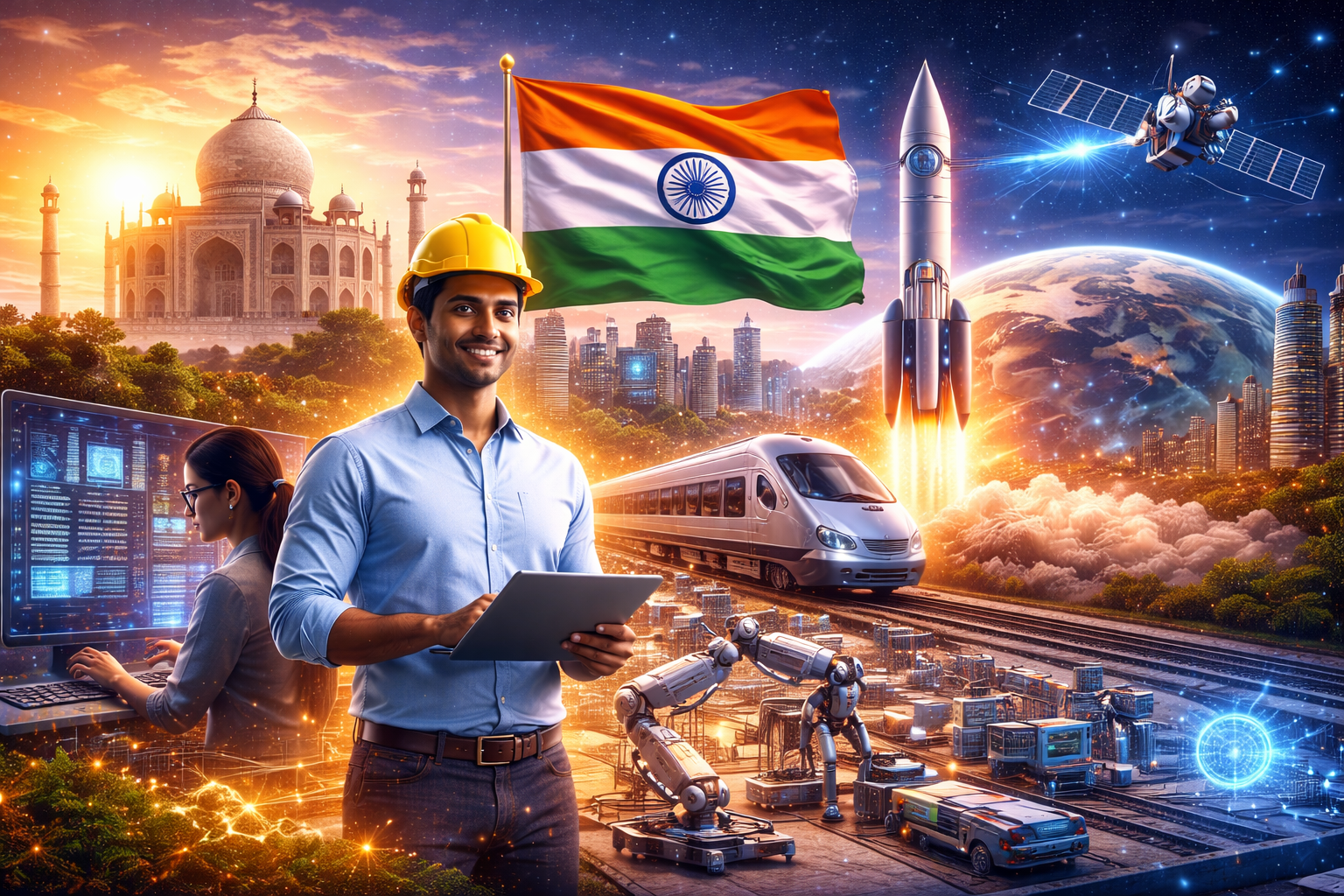
    India is rapidly emerging as one of the world’s most dynamic innovation hubs, positioning itself as the next global powerhouse of technology, entrepreneurship, and industrial growth. With a unique combination of a young workforce, digital adoption at scale, and strong policy support, India is no longer just a consumer market—it is becoming a global creator of ideas, solutions, and technologies.

    Over the past decade, India’s startup ecosystem has witnessed explosive growth. From fintech and e-commerce to artificial intelligence and deep tech, Indian startups are solving problems not just for domestic markets but for the world. The rise of unicorns across sectors highlights India’s ability to innovate at scale, driven by affordability, efficiency, and frugal engineering—often referred to as “innovation with impact.”

    Government-led initiatives have played a crucial role in accelerating this transformation. Programmes such as Digital India, Startup India, and Make in India have strengthened digital infrastructure, encouraged entrepreneurship, and boosted advanced manufacturing. These initiatives have helped India move up the global value chain, especially in electronics, renewable energy, defence manufacturing, and semiconductors.

    Technology has become the backbone of India’s innovation story. Widespread internet penetration, affordable data, and digital public infrastructure have enabled breakthroughs in digital payments, governance, healthcare, and education. India’s digital platforms are now studied globally as models for inclusive and scalable innovation, demonstrating how technology can reach billions efficiently.

    India is also making its mark in frontier sectors such as space technology, biotechnology, and clean energy. Low-cost space missions, advances in vaccine development, and rapid expansion of renewable energy capacity showcase India’s ability to compete with established global powers while maintaining cost efficiency. These achievements are reshaping global perceptions of India’s technological capabilities.

    Equally important is India’s demographic advantage. With one of the youngest populations in the world, the country is nurturing a generation of innovators, engineers, and entrepreneurs who are globally connected yet deeply aware of local challenges. This blend of global thinking and local problem-solving is driving innovations that are scalable, sustainable, and socially relevant.

    In the global economic landscape, innovation in India is no longer an emerging trend—it is a defining force. As investment flows increase and Indian companies expand internationally, the country is set to play a central role in shaping the future of technology, manufacturing, and digital economies.

    Final Perspective

    Innovation in India: The Next Global Powerhouse is not just a narrative—it is a reality unfolding in real time. With strong fundamentals, visionary leadership, and a culture of resilience and creativity, India is poised to become one of the most influential innovation-driven economies of the 21st century.

  • Top Innovators Under 40: Young Leaders Shaping the Future of Technology and Business

    Top Innovators Under 40: Young Leaders Shaping the Future of Technology and Business

    Top Innovators Under 40: The world’s most transformative ideas are increasingly coming from leaders who haven’t yet turned 40. These innovators under 40 are redefining industries, challenging legacy systems, and building solutions for a rapidly changing global economy. From technology and artificial intelligence to healthcare, sustainability, and finance, this new generation of innovators is proving that age is no barrier to global impact.

    What sets innovators under 40 apart is their ability to combine technology, speed, and purpose. Having grown up in a digital-first world, they instinctively understand platforms, data, and global connectivity. Many of them are founders of startups that scale at unprecedented speed, while others are leading innovation within established organizations, driving change from the inside.

    In technology, young innovators are pushing the boundaries of artificial intelligence, automation, and software development. Their work is transforming how businesses operate, how data is used, and how decisions are made. In healthcare and biotechnology, innovators under 40 are accelerating breakthroughs in diagnostics, personalized medicine, and digital health—making care more accessible and efficient. Meanwhile, in climate and sustainability, young leaders are developing clean energy solutions, carbon reduction technologies, and circular economy models to address one of the world’s most urgent challenges.

    Read more: Self-Made vs Inherited Billionaires: Two Paths to Extreme Wealth

    Entrepreneurship plays a central role in the rise of innovators under 40. Many have built companies from the ground up, often starting with little more than an idea and a laptop. Venture capital, global networks, and digital platforms have enabled these innovators to reach international markets faster than ever before. At the same time, social impact has become a defining theme—profit and purpose increasingly go hand in hand.

    Beyond startups, innovators under 40 are influencing policy, education, and culture. They are reshaping how people work, learn, communicate, and consume information. Their leadership styles tend to emphasize agility, collaboration, and long-term thinking, reflecting the demands of a complex, interconnected world.

    Ultimately, innovators under 40 represent the future of global leadership. Their ideas are not just incremental improvements—they are bold reimaginings of what’s possible. As their influence continues to grow, these young visionaries will play a decisive role in shaping economies, societies, and technologies for decades to come.

  • Ideas That Matter: 10 Innovations Changing Life as We Know It

    Ideas That Matter: 10 Innovations Changing Life as We Know It

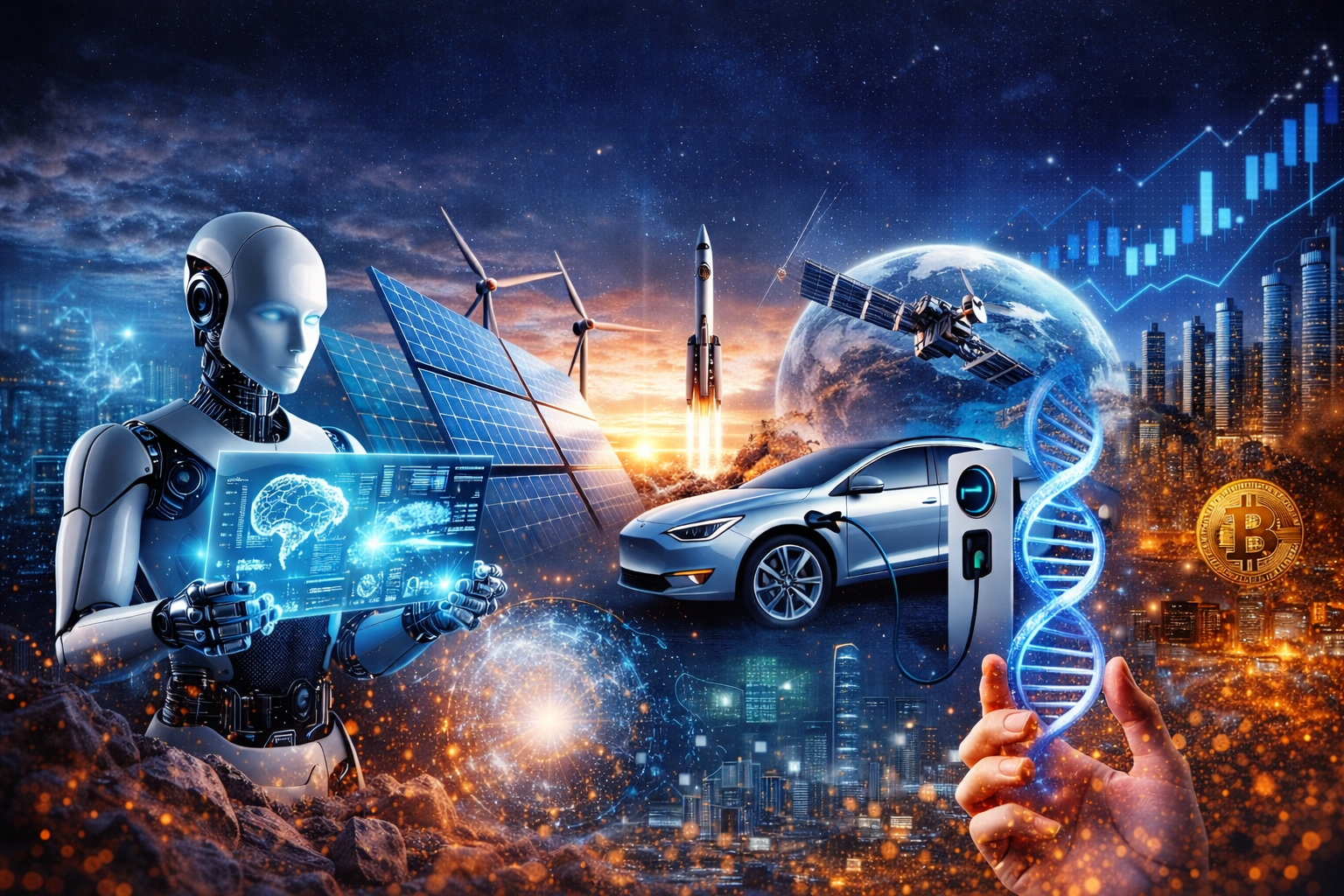
    Ideas That Matter: Innovation is reshaping the world at an unprecedented pace, redefining how we live, work, travel, and communicate. From breakthrough technologies to transformative ideas, today’s most powerful innovations are not just improving convenience—they are solving global challenges related to health, climate, connectivity, and sustainability. Here are the top 10 innovations changing the world right now, driving the future of the global economy and human progress.

    Artificial Intelligence has emerged as one of the most disruptive innovations of our time. From predictive analytics and automation to generative tools and smart assistants, AI is transforming industries such as healthcare, finance, education, and manufacturing. Its ability to analyze vast amounts of data and make intelligent decisions is accelerating productivity and innovation worldwide.

    Renewable energy technologies are revolutionizing how the world produces power. Solar, wind, and energy storage solutions are reducing dependence on fossil fuels while making clean energy more affordable and scalable. Advances in battery technology and smart grids are enabling countries to move closer to a sustainable and low-carbon future.

    Read more: Women Billionaires to Watch: Power, Influence, and the Future of Global Wealth

    Electric vehicles are reshaping global transportation by reducing emissions and dependence on traditional fuels. With rapid improvements in battery range, charging infrastructure, and affordability, EVs are becoming mainstream. This shift is also transforming supply chains, urban planning, and the future of mobility.

    Biotechnology is driving major breakthroughs in medicine and healthcare. Innovations such as gene editing, personalized medicine, and advanced diagnostics are improving disease prevention and treatment. These developments are extending life expectancy and offering solutions to previously untreatable conditions.

    The rise of fintech innovations has changed how people manage money. Digital payments, mobile banking, blockchain, and decentralized finance are increasing financial inclusion and making transactions faster, safer, and more transparent. These technologies are especially impactful in emerging markets.

    Space technology is no longer limited to governments. Private innovation in satellite systems, space exploration, and communication networks is improving global internet access, navigation, and climate monitoring. Space-based technologies are becoming essential to everyday life on Earth.

    Smart city technologies are redefining urban living. Using data, sensors, and connected infrastructure, cities are improving traffic management, energy efficiency, public safety, and waste management. These innovations aim to create more liveable, efficient, and sustainable urban environments.

    Advanced robotics and automation are transforming manufacturing, logistics, and healthcare. Robots are enhancing precision, reducing human risk in dangerous environments, and enabling large-scale automation, helping industries meet growing global demand.

    Agricultural technology is addressing food security challenges through innovations such as precision farming, vertical agriculture, and AI-driven crop monitoring. These solutions increase productivity while reducing water usage and environmental impact.

    Finally, immersive technologies like virtual reality and augmented reality are changing how people learn, train, shop, and entertain. By blending digital and physical worlds, these innovations are opening new possibilities across education, healthcare, real estate, and gaming.

    Together, these top 10 innovations changing the world right now highlight how technology and creativity are shaping a smarter, cleaner, and more connected future. As these innovations continue to evolve, their impact will only deepen—transforming economies, societies, and everyday life across the globe.

  • Youngest Billionaires in the World: The New Faces of Global Wealth

    Youngest Billionaires in the World: The New Faces of Global Wealth

    The youngest billionaires in the world represent a powerful shift in how wealth is created in the modern era. Unlike traditional tycoons who built fortunes over decades, today’s youngest billionaires have leveraged technology, innovation, startups, and inherited business empires to reach extraordinary financial milestones—often before turning 35.

    From self-made tech founders to heirs of global business dynasties, these young billionaires symbolize the next generation of global wealth, influence, and leadership. Here’s a Forbes-style look at who they are, how they became billionaires so early, and what industries are fueling their rise.

    1. Alexandr Wang

    Among the most talked-about names is Alexandr Wang, who became one of the youngest self-made billionaires through his work in artificial intelligence. By building critical data infrastructure used by leading tech companies and governments, Wang’s rise highlights how AI has become one of the fastest wealth-creating industries in the world. His success underscores the growing value of data, automation, and machine learning in the global economy.

    2. Kevin David Lehmann

    Inheritance also plays a significant role in shaping the list of the world’s youngest billionaires. Kevin David Lehmann gained billionaire status through a substantial stake in a major European drugstore chain, demonstrating that traditional retail businesses continue to generate immense wealth when scaled globally. Similarly, Kim Jung-youn represents the power of digital entertainment, with fortunes tied to the booming global online gaming industry, where virtual economies and esports now rival traditional media businesses.

    3. Luca Del Vecchio

    Luxury and consumer brands also contribute to youthful billionaire fortunes. Luca Del Vecchio, an heir to the world’s largest eyewear company, showcases how legacy luxury businesses maintain long-term global dominance. In emerging markets, figures such as Firoz Mistry highlight how diversified conglomerates in countries like India continue to create multigenerational wealth with global reach.

    What unites the world’s youngest billionaires is not just age, but influence. Whether self-made or inheritors, many of them shape investment trends, startup ecosystems, and future technologies. Their wealth is often closely tied to innovation-driven sectors such as artificial intelligence, gaming, digital platforms, and global consumer brands—industries that define modern economic growth.

    In essence, the youngest billionaires in the world symbolize a generational shift in global wealth creation. Their stories reveal how innovation, scale, and early access to opportunity can compress what once took a lifetime into just a few years, redefining both success and influence in the modern world.