Category: Billionaires

  • How Money Shapes Political Power: Influence, Access, and the Future of Democracy

    How Money Shapes Political Power: Influence, Access, and the Future of Democracy

    How Money Shapes Political Power: In every democracy, votes decide leaders—but money fuels the journey to power. From campaign rallies to digital advertising, from policy think tanks to media outreach, financial resources amplify political visibility.

    1. Elections Visibility Equals Viability

      Modern elections are capital-intensive. Financial strength enables:

      • Mass advertising campaigns
      • Data-driven voter targeting
      • Professional consultants and strategy teams
      • Nationwide organizational networks

      Candidates with stronger funding often dominate public attention. In competitive political systems, visibility directly impacts viability.

      2. Donations and Access to Decision-Makers

      Large political contributions may provide:

      • Direct access to leaders
      • Invitations to private policy discussions
      • Early insight into regulatory changes

      Institutions like the Election Commission of India regulate candidate spending, but broader party-level financing remains a complex ecosystem.

      Influence does not always operate through explicit exchanges. Often, it functions through access and proximity.

      3. Lobbying: Policy Influence Beyond Elections

      Political power extends beyond election day.

      Industry bodies such as the Confederation of Indian Industry and the Federation of Indian Chambers of Commerce & Industry engage policymakers on taxation, infrastructure, trade, and economic reforms.

      Lobbying can:

      • Shape regulatory frameworks
      • Influence industry incentives
      • Affect market competition
      • Impact long-term economic policy

      While consultation is essential for informed policymaking, unequal access can tilt policy priorities.

      4. Media and Narrative Control

      In the digital age, political power is also about narrative control.

      Money strengthens the ability to:

      • Dominate advertising space
      • Shape public perception
      • Amplify specific messages
      • Influence online discourse

      Control over narrative often translates into electoral momentum.

      5. Wealth, Governance, and Democratic Balance

      Democracy is built on political equality—one citizen, one vote. However, financial disparities can create influence imbalances.

      Concerns:

      • Wealthy donors gain disproportionate influence
      • Policy agendas may reflect financial interests
      • Smaller political groups face resource constraints

      Counterpoint:

      • Funding supports competitive politics
      • Economic stakeholders provide policy expertise
      • Campaign finance enables modern electoral operations

      The challenge lies in balance—not elimination.

      Transparency: The Foundation of Trust

      Strong disclosure norms, spending limits, and institutional oversight are critical to ensuring that money supports—not dominates—democracy.

      Transparent systems enhance public trust. Opaque systems weaken it.

      Read more: Policy Decisions That Create Billionaires: When Government Shapes Fortunes

      Conclusion: Influence Beyond the Ballot

      Money does not replace votes—but it amplifies voices. In today’s interconnected political and economic landscape, financial power often translates into strategic advantage.

      The future of democratic integrity depends on maintaining equilibrium between economic influence and political equality.

      Because when money shapes power without accountability, democracy risks becoming unequal. When regulated fairly, funding can strengthen participation and governance.


    1. Political Risk & Global Wealth: How Power and Instability Shape Fortunes

      Political Risk & Global Wealth: How Power and Instability Shape Fortunes

      Political Risk & Global Wealth: In a globalised economy, wealth is no longer shaped by markets alone. Elections, policy changes, sanctions, wars, and regulatory shifts can instantly affect stock markets, commodities, currencies, and billion-dollar enterprises.

      Political risk has become one of the most powerful forces influencing global wealth creation and destruction.

      What Is Political Risk?

      Political risk refers to the possibility that political decisions or instability will negatively—or positively—affect investments and economic outcomes.

      It includes:

      • Government policy changes
      • Tax reforms
      • Trade restrictions
      • Sanctions
      • Nationalization
      • Political instability or regime change

      Even rumours of instability can trigger capital flight or market volatility.

      How Political Risk Creates and Destroys Wealth

      1️⃣ Regulatory Shifts

      Sudden regulatory reforms can wipe out industries—or create overnight market leaders.

      2️⃣ Trade Policies & Tariffs

      Global trade agreements or trade wars reshape supply chains and corporate valuations.

      3️⃣ Sanctions & Geopolitical Conflict

      Sanctions can freeze assets, block global access, and shift economic power balances.

      4️⃣ Elections & Policy Direction

      Markets often react strongly to leadership changes that signal economic reform or protectionism.

      Wealth Migration & Safe Havens

      During high political risk, global wealth often moves toward:

      • Stable democracies
      • Low-tax jurisdictions
      • Strong legal systems
      • Diversified economies

      Investors hedge against uncertainty by reallocating assets across borders.

      Read more: Policy Decisions That Create Billionaires: When Government Shapes Fortunes

      Emerging Markets: High Risk, High Reward

      Political instability can deter investors—but reform-driven governance can attract massive capital inflows.

      Emerging economies often experience:

      • Rapid wealth creation during reform periods
      • Capital outflows during instability
      • Currency volatility linked to political events

      The risk-return balance defines investor behaviour.

      The Billionaire Effect

      For ultra-high-net-worth individuals and multinational corporations:

      • Diversification across countries reduces exposure
      • Political connections can reduce regulatory uncertainty
      • Strategic lobbying may mitigate policy shocks

      Global wealth is increasingly tied to political foresight.

      Conclusion

      Political risk is not just a threat—it is a defining force in modern wealth dynamics. From elections to international conflicts, governance decisions shape economic opportunity.

      In today’s interconnected world, understanding political risk is essential for protecting and growing global wealth.

    2. Money in Politics: The Real Power of Big Campaign Donors

      Money in Politics: The Real Power of Big Campaign Donors

      Money in Politics: In modern democracies, political funding is essential for running campaigns, organising outreach, and influencing voters. However, the growing role of big political donors has sparked intense debate about money, power, and democracy.

      From corporate executives to billionaires and industry-backed committees, major donors contribute millions to political campaigns every election cycle. But the real question remains: what do they gain in return?

      How Political Campaign Funding Works

      Political campaign finance typically operates through several structured channels:

      1. Individual High-Value Donations

      Wealthy individuals often contribute large sums directly to candidates, parties, or fundraising committees.

      2. Political Action Committees (PACs)

      PACs pool contributions from members and donate strategically to candidates who align with their interests.

      3. Super PACs and Independent Expenditures

      In the United States, the landmark case Citizens United v. FEC allowed corporations and unions to spend unlimited funds on independent political messaging, significantly increasing corporate political influence.

      4. Corporate and Industry Lobbying

      Businesses invest heavily in political lobbying to shape legislation and regulatory frameworks.

      Why Big Donors Invest in Politics

      Large political donors often view contributions as strategic investments. Their motivations generally include:

      • Policy Alignment: Supporting candidates who favor tax reforms, deregulation, or industry-friendly policies.
      • Access to Decision-Makers: Donations can provide privileged access to lawmakers and policy discussions.
      • Regulatory Influence: Businesses may aim to reduce compliance burdens or shape industry standards.
      • Ideological Beliefs: Some donors support causes tied to social, cultural, or economic ideologies.

      Political funding is rarely random—it is often calculated and strategic.

      What Big Political Donors Gain in Return

      While direct bribery is illegal in most democracies, influence can manifest in more subtle ways:

      1. Legislative Favors

      Laws and amendments may reflect donor interests, especially in areas like taxation, environmental policy, healthcare, and trade.

      2. Government Contracts

      Major contributors sometimes benefit from public contracts or procurement opportunities.

      3. Regulatory Flexibility

      Industries may experience relaxed oversight or favourable interpretations of regulations.

      Read More – Tech Billionaires Dominating the Future: Powering the Next Era of Innovation

      4. Agenda Setting

      Perhaps the most powerful influence is shaping which issues receive attention—and which do not.

      The Debate: Free Speech vs. Political Inequality

      Supporters argue that political donations represent freedom of expression and democratic participation. Critics counter that excessive corporate political influence can distort public representation, giving wealthy donors disproportionate power compared to ordinary voters.

      The debate over campaign finance reform continues globally, as citizens demand greater transparency and accountability.

      Transparency and Reform in Political Funding

      Many democracies are introducing stricter disclosure rules, donation caps, and public funding systems to reduce the dominance of big donors in politics. Transparency is often seen as the key to restoring trust in electoral systems.

      Without accountability, political funding can undermine democratic equality.

      Conclusion

      Big donors undeniably play a significant role in modern politics. While political funding is necessary for democratic processes, unchecked financial influence raises serious questions about fairness and representation.

      Understanding how campaign finance works—and who benefits—is essential for voters, policymakers, and anyone concerned about the future of democracy.

    3. Inside the Biggest Wealth Gainers and Losers of the Year

      Inside the Biggest Wealth Gainers and Losers of the Year

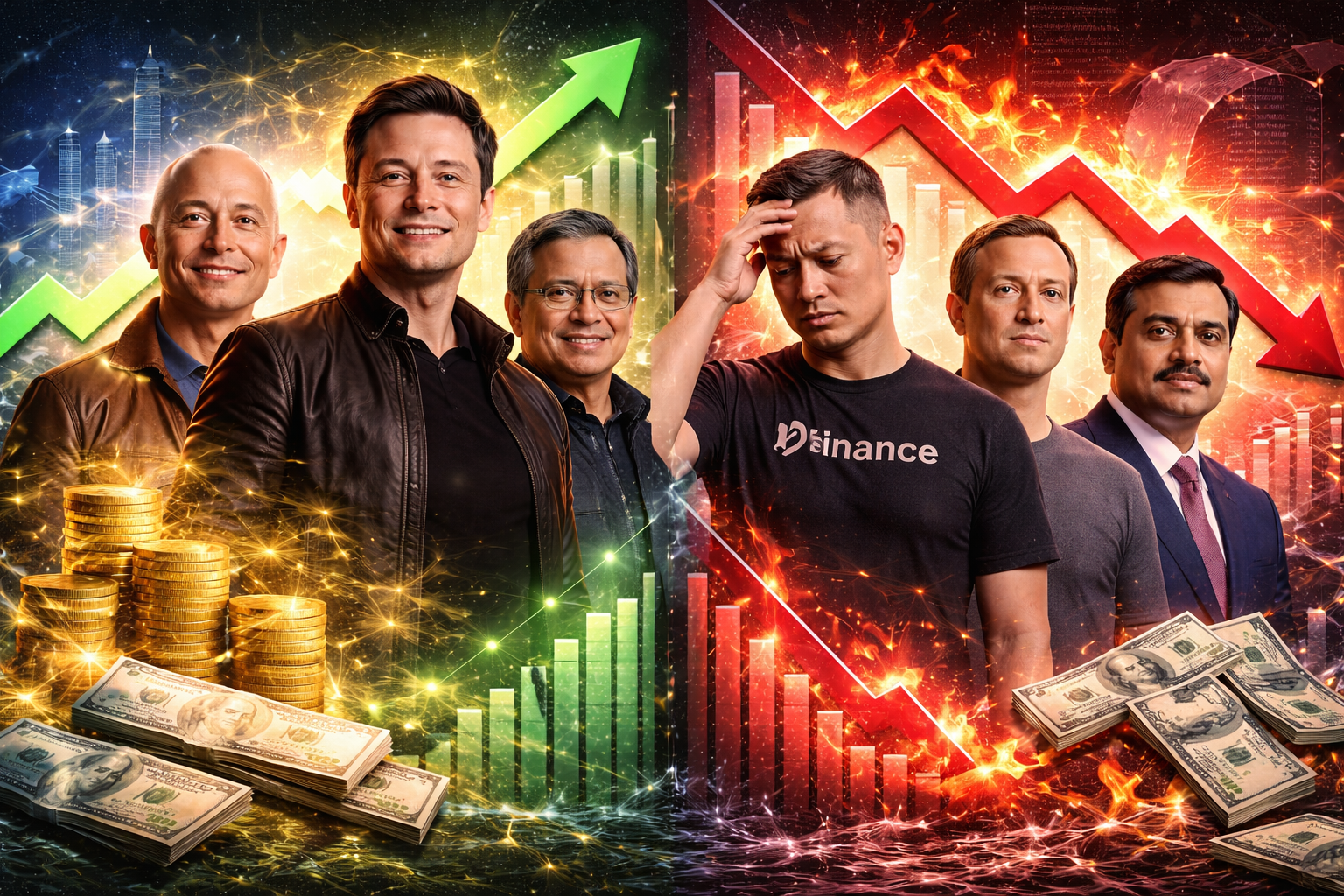
      Every year, global markets create dramatic shifts in personal fortunes. Stock market volatility, technology breakthroughs, geopolitical tensions, and changing consumer behaviour decide who wins big—and who takes a hit. The biggest wealth gainers and losers this year highlight how quickly fortunes can rise or fall in today’s interconnected global economy.

      From tech-driven rallies to sector-wide downturns, this year has been a clear reminder that wealth is dynamic, not static.

      The Biggest Wealth Gainers

      This year’s top wealth gainers largely benefited from technology-led growth, artificial intelligence optimism, and strong equity market rebounds. Investors and founders tied to high-growth sectors such as AI, cloud computing, electric vehicles, and digital platforms saw their net worth surge as markets rewarded innovation and scalability.

      Rising stock prices, renewed investor confidence, and strategic expansions helped propel fortunes upward. In several cases, even a single product breakthrough or earnings beat added billions to personal wealth almost overnight. These gains reflect how markets increasingly favour future-facing businesses over traditional models.

      The Biggest Wealth Losers

      On the other side, the biggest wealth losers were hit by market corrections, regulatory pressure, declining stock valuations, and global uncertainty. Sectors such as traditional energy, real estate, consumer goods, and highly leveraged businesses faced headwinds from rising interest rates, slowing demand, and geopolitical risks.

      Some high-profile losses were driven by sharp drops in share prices, while others resulted from long-term structural challenges rather than sudden shocks. This year underscored a harsh reality: even vast fortunes are vulnerable to market sentiment and macroeconomic forces.

      Read more: Self-Made vs Inherited Billionaires: Two Paths to Extreme Wealth

      What Drove the Wealth Swings

      The biggest drivers behind wealth gains and losses this year include inflation trends, central bank policies, technology adoption cycles, and investor risk appetite. Artificial intelligence emerged as a major wealth creator, while sectors exposed to debt, regulatory scrutiny, or slowing growth struggled to keep pace.

      Global events also played a critical role. Elections, conflicts, supply-chain disruptions, and energy price fluctuations all influenced market movements, directly impacting billionaire net worth across regions.

      Why These Shifts Matter

      Tracking the biggest wealth gainers and losers is about more than curiosity—it reveals where the global economy is heading. Wealth gains point to emerging opportunities and innovation-led growth, while losses signal sectors under pressure or undergoing transformation.

      For investors, policymakers, and businesses alike, these shifts offer valuable insights into future trends, risks, and opportunities in the global financial landscape.

    4. Indian Billionaires on the Global Stage: Power, Influence & Global Reach

      Indian Billionaires on the Global Stage: Power, Influence & Global Reach

      Indian Billionaires on the Global Stage: Indian billionaires are no longer confined to domestic markets—they are now major players on the global stage, shaping industries, influencing geopolitics, and redefining how emerging-market wealth competes internationally. From energy and infrastructure to technology, retail, and manufacturing, India’s richest entrepreneurs are building global-scale enterprises that rival the world’s biggest corporations.

      This rise reflects India’s growing economic confidence, expanding capital markets, and its ability to produce business leaders with long-term vision and global ambition.

      India’s Billionaires as Global Power Brokers

      At the forefront of this transformation is Mukesh Ambani, whose business empire spans energy, telecom, retail, and digital platforms. Through large-scale investments and strategic partnerships with global giants, Ambani has positioned Indian enterprise at the centre of the world’s digital and consumer economy.

      Similarly, Gautam Adani has emerged as a global infrastructure heavyweight. With interests across ports, power, renewable energy, and logistics, Adani-led companies play a critical role in global supply chains and the clean energy transition, reinforcing India’s importance in global trade and sustainability.

      Technology, Knowledge & Global Reach

      India’s global influence is not limited to infrastructure and energy. Shiv Nadar represents India’s leadership in technology and IT services. His contributions helped establish India as a global technology hub, serving Fortune 500 companies and shaping digital transformation worldwide.

      Read more – Tech Billionaires Dominating the Future: Powering the Next Era of Innovation

      Retail and consumer markets also tell a powerful story. Radhakishan Damani has built one of the most efficient retail models globally, attracting international investor attention for its disciplined growth and strong governance.

      Why Indian Billionaires Matter Globally

      What sets Indian billionaires apart on the global stage is scale combined with cost efficiency. Their businesses often serve hundreds of millions of consumers while maintaining competitive pricing—an advantage increasingly valuable in a slowing global economy. Many are also investing heavily in renewable energy, digital infrastructure, and manufacturing, aligning with global priorities such as sustainability and supply-chain resilience.

      Indian billionaires are also becoming influential global investors, philanthropists, and policy influencers. Their decisions affect employment, innovation, and capital flows far beyond India’s borders.

      India’s Wealth, the World’s Attention

      As India continues its rise as a major economic power, its billionaires are becoming symbols of the country’s global aspirations. Their presence in international markets, partnerships with multinational corporations, and leadership in future-facing industries signal a clear shift—India is no longer following global business trends; it is helping set them.

      Indian billionaires on the global stage represent more than personal success stories. They embody India’s transformation into a confident, competitive, and influential force in the world economy. As global power centres diversify, India’s wealth creators are set to play an even bigger role in shaping the future of business and innovation worldwide.

    5. Women Billionaires to Watch: Power, Influence, and the Future of Global Wealth

      Women Billionaires to Watch: Power, Influence, and the Future of Global Wealth

      Women Billionaires to Watch: Women billionaires are playing an increasingly influential role in shaping the global economy, breaking long-standing gender barriers across industries such as technology, finance, manufacturing, retail, and healthcare. Whether self-made entrepreneurs or leaders of legacy business empires, these women represent resilience, strategic leadership, and long-term vision. As global markets evolve, their decisions and investments are redefining what modern wealth and influence look like.

      1. Françoise Bettencourt Meyers

        Among the most closely watched names is Françoise Bettencourt Meyers, whose wealth is rooted in the global dominance of the beauty and cosmetics industry. Beyond inheritance, she has played a key role in guiding the company’s long-term strategy, blending tradition with innovation. Her influence highlights how consumer brands led by women continue to thrive worldwide.

        2. Julia Koch

        Another powerful figure is Julia Koch, whose fortune is tied to one of the largest privately held conglomerates in the world. As a major stakeholder, her growing public and philanthropic presence underscores how women billionaires are increasingly visible in areas beyond business, including education, healthcare, and social development.

        3. Rafaela Aponte-Diamant

        On the self-made front, Rafaela Aponte-Diamant stands out as one of the richest self-made women globally. Her journey from entrepreneur to shipping magnate reflects how women are building billion-dollar enterprises even in traditionally male-dominated industries like global logistics and maritime trade.

        4. MacKenzie Scott

        Technology and innovation also feature strongly among women billionaires to watch. MacKenzie Scott, though widely known for her association with the tech world, has emerged as a transformative figure through large-scale philanthropy. Her approach to wealth distribution is influencing how billionaire philanthropy is perceived and practised worldwide.

        Read More – Self-Made vs Inherited Billionaires: Two Paths to Extreme Wealth

        What sets women billionaires apart is not just their net worth, but the impact they create. Many are actively reshaping corporate governance, championing sustainability, investing in innovation, and supporting social causes at scale. Their leadership styles often emphasize long-term growth, inclusion, and adaptability—qualities increasingly vital in today’s volatile global economy.

        In the years ahead, women billionaires to watch will continue to gain prominence as role models and decision-makers on the world stage. Their rise signals a broader shift toward more diverse leadership in global wealth creation, proving that influence and economic power are no longer confined to traditional norms.


      1. Self-Made vs Inherited Billionaires: Two Paths to Extreme Wealth

        Self-Made vs Inherited Billionaires: Two Paths to Extreme Wealth

        Self-Made vs Inherited Billionaires: In the world of extreme wealth, billionaires generally fall into two broad categories: self-made billionaires and inherited billionaires. While both command enormous financial power and global influence, the journeys that lead them to the billionaire club are often dramatically different. This contrast reveals much about how modern economies reward innovation, opportunity, and legacy.

        Self-made billionaires are individuals who built their fortunes largely through their own ideas, risk-taking, and entrepreneurial drive. Many of today’s most prominent self-made billionaires rose through industries such as technology, finance, e-commerce, and manufacturing. By founding startups, scaling businesses globally, or investing strategically, they turned innovation into wealth. Their stories are often defined by disruption—challenging traditional industries, adopting new technologies, and moving faster than established competitors. This group is frequently celebrated for embodying meritocracy, ambition, and resilience.

        Read more – Youngest Billionaires in the World: The New Faces of Global Wealth

        Inherited billionaires, on the other hand, derive a significant portion of their wealth from family businesses, trusts, or long-established corporate empires. These fortunes are typically built over generations in sectors like retail, luxury goods, real estate, natural resources, and conglomerates. While inherited wealth may appear passive, many heirs play active roles in managing, modernizing, or expanding legacy businesses. Their challenge often lies in preservation—protecting wealth during economic shifts while adapting traditional enterprises to changing global markets.

        The distinction between self-made and inherited wealth is not always absolute. Many inherited billionaires grow their fortunes far beyond what they received by making bold investments or restructuring family businesses, while some self-made billionaires benefit from early access to education, networks, or capital. As a result, billionaire wealth today often reflects a blend of personal effort and inherited advantage rather than a simple binary.

        From a global perspective, self-made billionaires dominate technology-driven economies, particularly in the United States and parts of Asia, where startups and innovation ecosystems thrive. In contrast, inherited billionaires remain more common in Europe and emerging markets, where family-owned enterprises and dynastic wealth structures are deeply rooted. This geographic divide highlights how culture, regulation, and economic history shape paths to wealth.

        Ultimately, the debate between self-made vs inherited billionaires is less about which path is superior and more about understanding how wealth is created and sustained. Together, these two groups define the modern billionaire landscape—one driven by innovation and disruption, the other by legacy and continuity—both playing a powerful role in shaping the global economy.

      2. Youngest Billionaires in the World: The New Faces of Global Wealth

        Youngest Billionaires in the World: The New Faces of Global Wealth

        The youngest billionaires in the world represent a powerful shift in how wealth is created in the modern era. Unlike traditional tycoons who built fortunes over decades, today’s youngest billionaires have leveraged technology, innovation, startups, and inherited business empires to reach extraordinary financial milestones—often before turning 35.

        From self-made tech founders to heirs of global business dynasties, these young billionaires symbolize the next generation of global wealth, influence, and leadership. Here’s a Forbes-style look at who they are, how they became billionaires so early, and what industries are fueling their rise.

        1. Alexandr Wang

        Among the most talked-about names is Alexandr Wang, who became one of the youngest self-made billionaires through his work in artificial intelligence. By building critical data infrastructure used by leading tech companies and governments, Wang’s rise highlights how AI has become one of the fastest wealth-creating industries in the world. His success underscores the growing value of data, automation, and machine learning in the global economy.

        2. Kevin David Lehmann

        Inheritance also plays a significant role in shaping the list of the world’s youngest billionaires. Kevin David Lehmann gained billionaire status through a substantial stake in a major European drugstore chain, demonstrating that traditional retail businesses continue to generate immense wealth when scaled globally. Similarly, Kim Jung-youn represents the power of digital entertainment, with fortunes tied to the booming global online gaming industry, where virtual economies and esports now rival traditional media businesses.

        3. Luca Del Vecchio

        Luxury and consumer brands also contribute to youthful billionaire fortunes. Luca Del Vecchio, an heir to the world’s largest eyewear company, showcases how legacy luxury businesses maintain long-term global dominance. In emerging markets, figures such as Firoz Mistry highlight how diversified conglomerates in countries like India continue to create multigenerational wealth with global reach.

        What unites the world’s youngest billionaires is not just age, but influence. Whether self-made or inheritors, many of them shape investment trends, startup ecosystems, and future technologies. Their wealth is often closely tied to innovation-driven sectors such as artificial intelligence, gaming, digital platforms, and global consumer brands—industries that define modern economic growth.

        In essence, the youngest billionaires in the world symbolize a generational shift in global wealth creation. Their stories reveal how innovation, scale, and early access to opportunity can compress what once took a lifetime into just a few years, redefining both success and influence in the modern world.

      3. World’s Top 10 Billionaires of the Year: The Ultimate Global Rich List

        World’s Top 10 Billionaires of the Year: The Ultimate Global Rich List

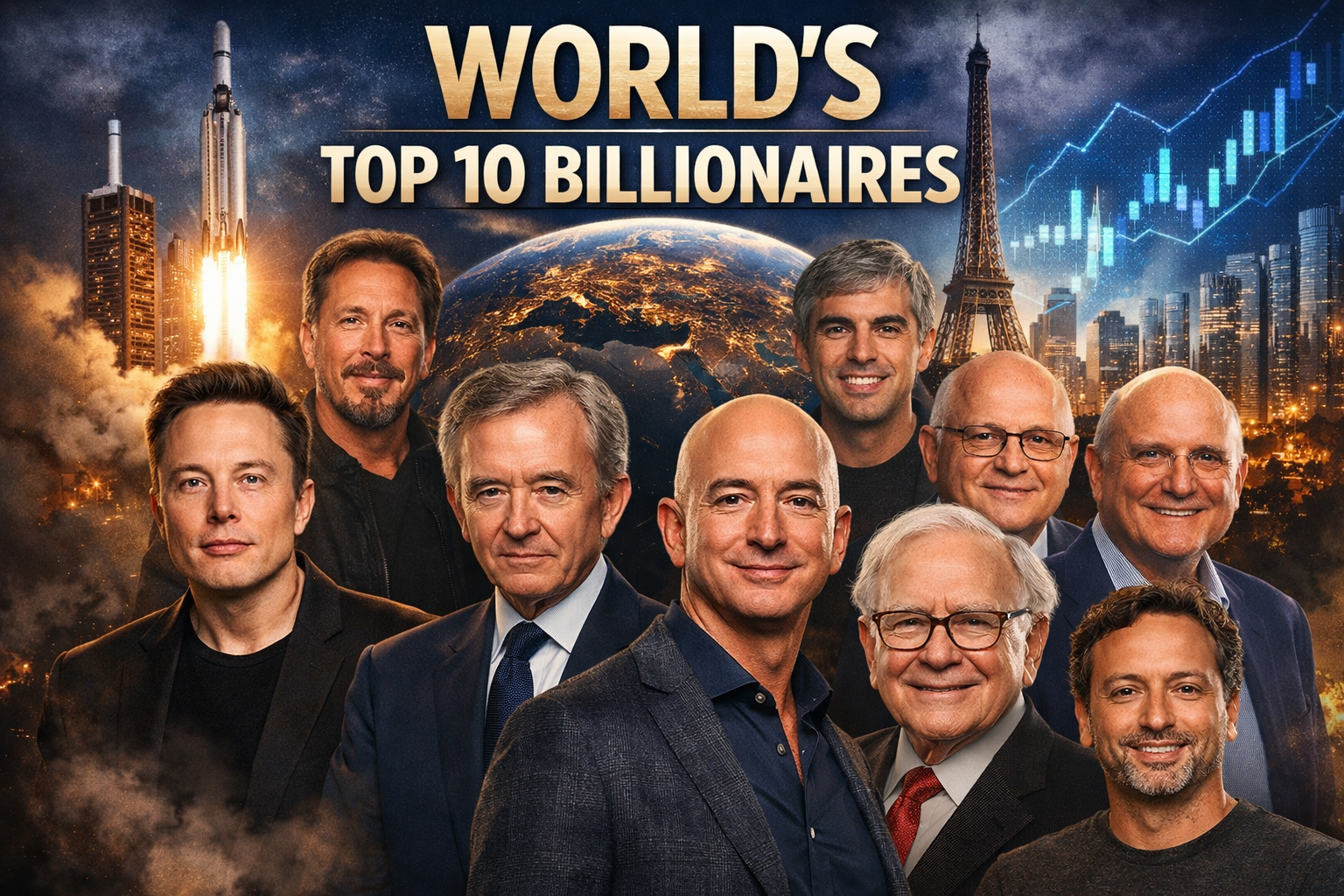
        World’s Top 10 Billionaires: The annual ranking of the World’s Top 10 Billionaires is more than a list of extreme wealth—it’s a snapshot of global economic power, innovation, and influence. These individuals sit at the intersection of technology, luxury, finance, and digital platforms, shaping how the world shops, communicates, invests, and even explores space.

        From Silicon Valley disruptors to European luxury titans, the billionaires on this list have built empires that transcend borders. Their fortunes rise and fall with markets, but their long-term impact on industries and society remains undeniable. Below is a Forbes-style, SEO-optimized overview of the Top 10 Billionaires of the Year, highlighting who they are, how they made their money, and why they matter.

        Top 10 Billionaires in the World

        1. Elon Musk

        Industry: Electric Vehicles, Space, Artificial Intelligence
        Why He Ranks at the Top:
        A symbol of bold innovation, Musk’s wealth is powered by electric mobility, private space exploration, and future-focused technologies that continue to disrupt traditional industries

        2. Bernard Arnault

        Industry: Luxury Goods & Fashion
        Key Strength:
        As the force behind the world’s largest luxury group, Arnault dominates global fashion, cosmetics, and lifestyle markets driven by premium brand demand.

        3. Jeff Bezos

        Industry: E-commerce, Cloud Computing
        Wealth Driver:
        Bezos revolutionised global retail and logistics while building one of the most profitable cloud computing ecosystems in the world.

        4. Larry Ellison

        Industry: Enterprise Software, Cloud Technology
        Business Edge:
        A pioneer in database software, Ellison’s company remains deeply embedded in global corporate and government IT systems.

        5. Mark Zuckerberg

        Industry: Social Media, Digital Advertising
        Growth Engine:
        Zuckerberg’s wealth reflects the massive scale of social networking platforms and long-term bets on immersive digital experiences.

        6. Warren Buffett

        Industry: Investments, Insurance
        Why He Endures:
        Renowned for value investing and patience, Buffett’s diversified holdings make him a constant presence among the world’s richest.

        7. Bill Gates

        Industry: Software, Philanthropy
        Beyond Business:
        While his fortune stems from software dominance, Gates is equally influential through global initiatives in health, education, and climate action.

        8. Larry Page

        Industry: Internet, Search Technology
        Revenue Base:
        Search, digital advertising, and AI-led innovation continue to fuel Page’s position among the world’s elite billionaires.

        9. Sergey Brin

        Industry: Internet, Artificial Intelligence
        Innovation Focus:
        Brin’s fortune grows alongside advances in data, automation, and next-generation computing.

        10. Steve Ballmer

        Industry: Technology, Sports Ownership
        Diversification Strategy:
        Ballmer blends legacy software wealth with high-profile investments beyond tech, showcasing strategic diversification.

        The World’s Top 10 Billionaires of the Year reflect how vision, scale, and timing can transform ideas into global empires. As markets evolve, these individuals will continue to influence not just wealth rankings but the direction of the global economy itself.