Author: voux

  • Lessons from Billionaires: What Success at the Highest Level Teaches Us

    Lessons from Billionaires: What Success at the Highest Level Teaches Us

    Lessons from Billionaires: Billionaires come from different countries, industries, and backgrounds—but the principles behind their success often overlap. Studying the lessons from billionaires offers valuable insight into leadership, decision-making, risk-taking, and long-term thinking that applies far beyond wealth creation.

    One of the strongest lessons from billionaires is the power of long-term vision. Most didn’t build fortunes overnight. They focused on industries with future potential, stayed patient during downturns, and resisted short-term distractions. This ability to think in decades rather than quarters separates exceptional leaders from average performers.

    Another defining trait is calculated risk-taking. Billionaires are not reckless gamblers; they take informed risks backed by data, conviction, and timing. Whether launching a startup, entering a new market, or investing in disruptive technology, they accept uncertainty as a necessary part of growth.

    Relentless focus and discipline also stand out. Many billionaires simplify decisions, prioritize what truly matters, and avoid spreading themselves too thin. They build strong teams, delegate effectively, and focus their energy on high-impact choices rather than daily noise.

    Read more – Youngest Billionaires in the World: The New Faces of Global Wealth

    Innovation is another recurring lesson. Billionaires consistently challenge existing systems and question assumptions. They invest in research, embrace technology, and adapt quickly to change. In a fast-moving world, adaptability often proves more valuable than experience alone.

    Equally important is resilience. Almost every billionaire story includes failure—rejected ideas, financial losses, or public criticism. What matters is the ability to learn, recover, and move forward stronger. Failure, for them, is feedback—not defeat.

    Finally, many billionaires emphasize impact beyond money. As their wealth grows, so does their focus on legacy—through philanthropy, sustainability, and social responsibility. This shift highlights a broader lesson: true success is not just about accumulation but about contribution.

    Read more – Tech Billionaires Dominating the Future: Powering the Next Era of Innovation

    The real lessons from billionaires are not about becoming rich—they are about building vision, discipline, resilience, and impact. These principles can guide entrepreneurs, leaders, and professionals at any stage of life, proving that the billionaire mindset is as much about values as it is about wealth.

  • Redefining Riches: Billionaires and the New Age of Philanthropy

    Redefining Riches: Billionaires and the New Age of Philanthropy

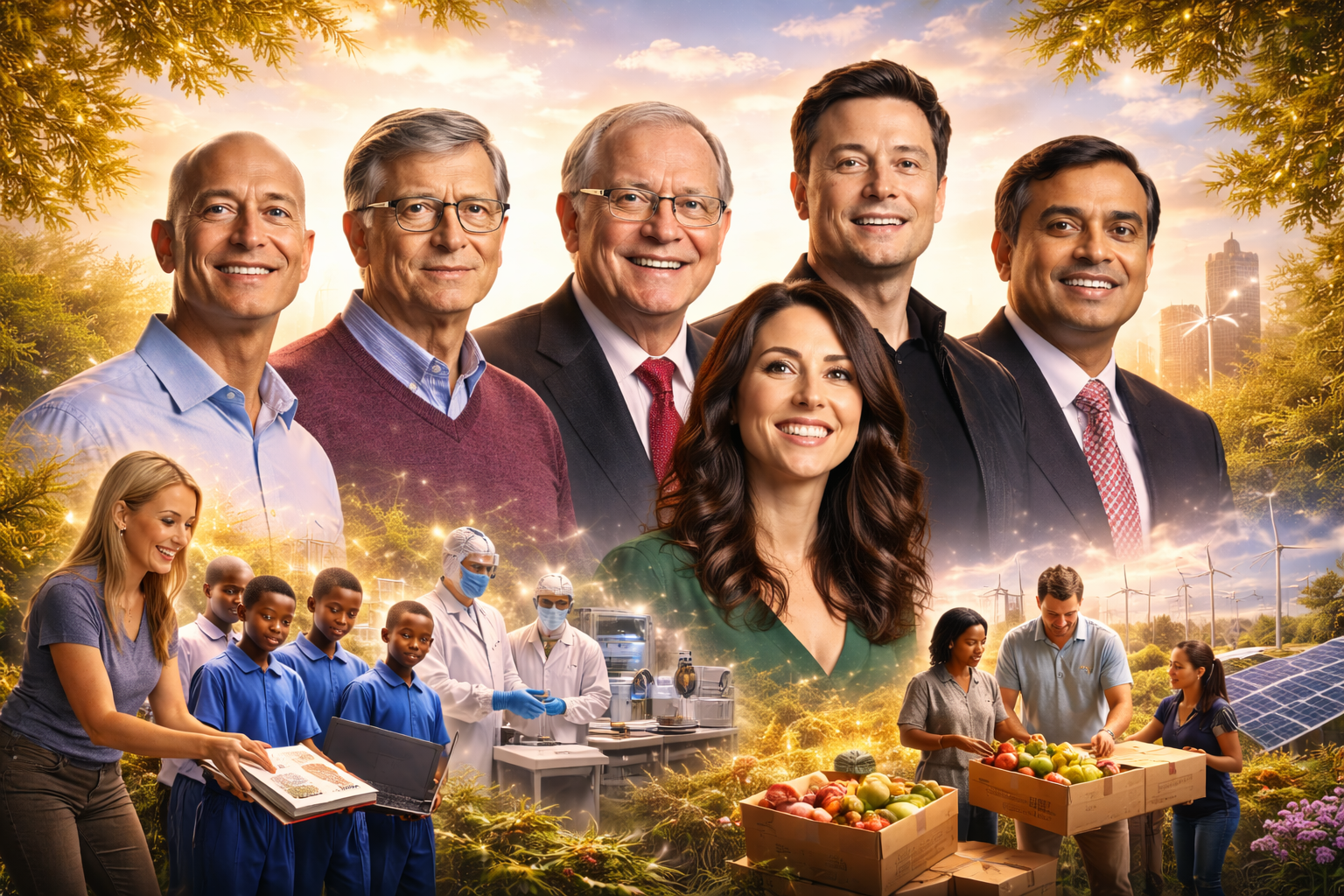
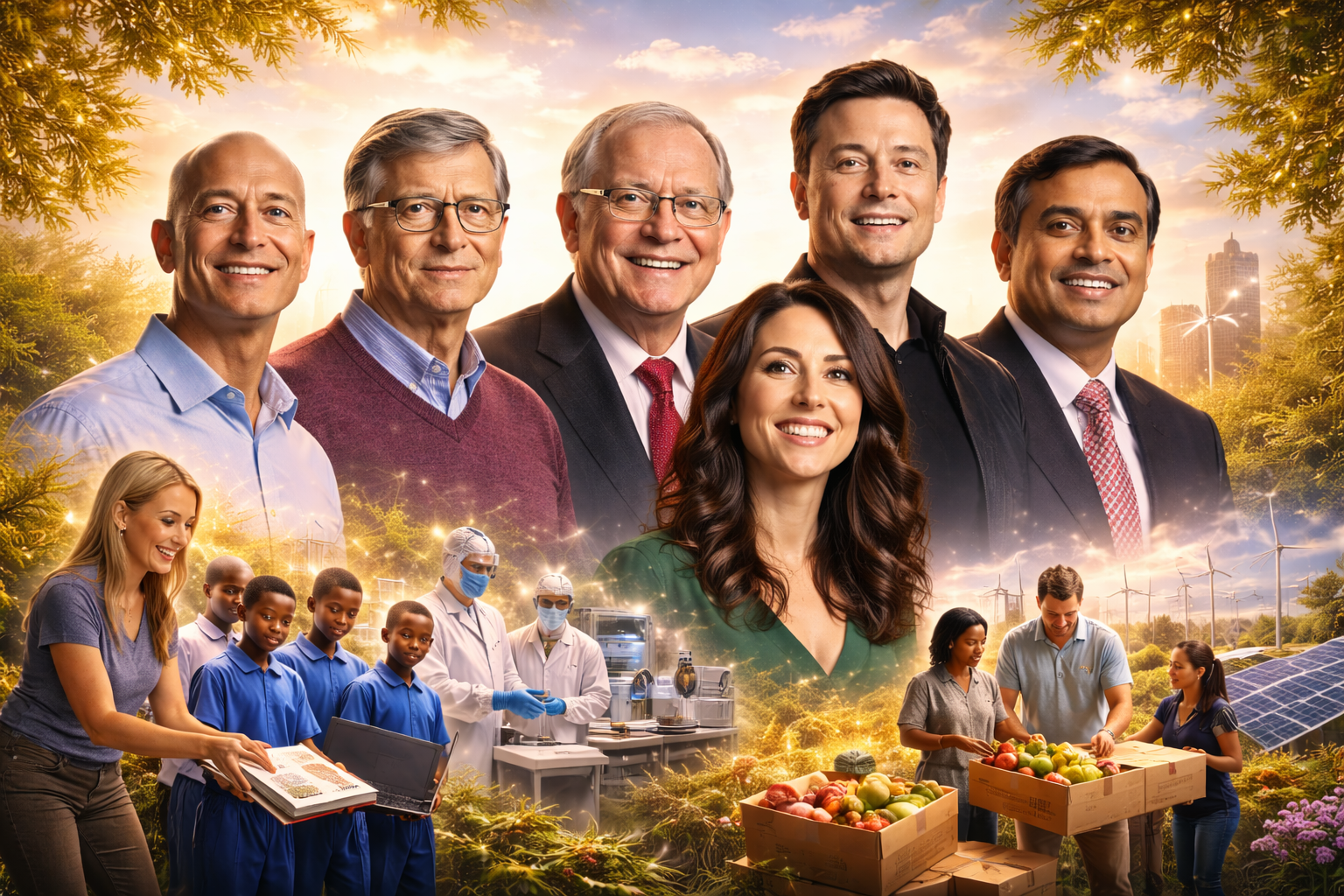
    As global inequality and social challenges grow more complex, philanthropy has become an increasingly important part of the billionaire narrative. For many of the world’s richest individuals, wealth is no longer just a measure of success—it is a tool for impact. Philanthropy shows how billionaires give back, reshaping education, healthcare, climate action, and social development on a global scale.

    From funding medical research to tackling climate change, billionaire philanthropy is influencing millions of lives across borders.

    The Shift from Charity to Strategic Philanthropy

    Modern philanthropy has evolved beyond traditional charity. Today’s billionaires often adopt a strategic, long-term approach, treating social problems with the same discipline used to build businesses. Instead of one-time donations, they invest in scalable solutions, measurable outcomes, and sustainable impact.

    This shift has led to the rise of large philanthropic foundations, impact investing, and partnerships with governments and global organisations, ensuring that funds create lasting change.

    Education and Knowledge Creation

    Education remains one of the most popular focus areas for billionaire philanthropy. Wealthy donors are funding universities, scholarships, digital learning platforms, and skill-development programmes. These efforts aim to expand access to quality education, reduce inequality, and prepare future generations for a technology-driven world.

    By supporting research institutions and innovation hubs, billionaire philanthropy is also accelerating scientific discovery and knowledge sharing.

    Read more – Youngest Billionaires in the World: The New Faces of Global Wealth

    Healthcare, Research, and Global Well-Being

    Healthcare is another major pillar of billionaire giving. Philanthropic funding has played a crucial role in vaccine development, disease prevention, hospital infrastructure, and global health initiatives. Billionaires often support cutting-edge medical research, especially in areas where public funding is limited or slow.

    In developing countries, philanthropic efforts help improve access to basic healthcare, clean water, and nutrition—saving lives and strengthening communities.

    Climate Change and Sustainability

    As climate risks intensify, many billionaires are directing their wealth toward environmental causes. Investments in renewable energy, conservation, carbon reduction, and sustainable agriculture are becoming central to modern philanthropy. These initiatives aim not only to protect the planet but also to drive innovation in green technologies.

    Climate-focused philanthropy reflects a growing recognition that economic success is deeply linked to environmental stability.

    Social Impact and Inclusive Growth

    Beyond education and health, billionaire philanthropy supports social justice, poverty alleviation, gender equality, and entrepreneurship. Many donors fund programmes that empower marginalised communities, promote financial inclusion, and create employment opportunities.

    Some billionaires are also rethinking wealth itself—pledging to give away a majority of their fortunes during their lifetime, reinforcing the idea that wealth carries social responsibility.

    Why Billionaire Philanthropy Matters

    The scale of billionaire giving allows rapid responses to global crises, from pandemics to natural disasters. While debates around accountability and influence continue, there is no denying the impact philanthropy can have when aligned with transparency, collaboration, and ethical intent.

    Tracking how billionaires give back offers insight into evolving values, global priorities, and the role private wealth plays in shaping public good.

  • Inside the Biggest Wealth Gainers and Losers of the Year

    Inside the Biggest Wealth Gainers and Losers of the Year

    Every year, global markets create dramatic shifts in personal fortunes. Stock market volatility, technology breakthroughs, geopolitical tensions, and changing consumer behaviour decide who wins big—and who takes a hit. The biggest wealth gainers and losers this year highlight how quickly fortunes can rise or fall in today’s interconnected global economy.

    From tech-driven rallies to sector-wide downturns, this year has been a clear reminder that wealth is dynamic, not static.

    The Biggest Wealth Gainers

    This year’s top wealth gainers largely benefited from technology-led growth, artificial intelligence optimism, and strong equity market rebounds. Investors and founders tied to high-growth sectors such as AI, cloud computing, electric vehicles, and digital platforms saw their net worth surge as markets rewarded innovation and scalability.

    Rising stock prices, renewed investor confidence, and strategic expansions helped propel fortunes upward. In several cases, even a single product breakthrough or earnings beat added billions to personal wealth almost overnight. These gains reflect how markets increasingly favour future-facing businesses over traditional models.

    The Biggest Wealth Losers

    On the other side, the biggest wealth losers were hit by market corrections, regulatory pressure, declining stock valuations, and global uncertainty. Sectors such as traditional energy, real estate, consumer goods, and highly leveraged businesses faced headwinds from rising interest rates, slowing demand, and geopolitical risks.

    Some high-profile losses were driven by sharp drops in share prices, while others resulted from long-term structural challenges rather than sudden shocks. This year underscored a harsh reality: even vast fortunes are vulnerable to market sentiment and macroeconomic forces.

    Read more: Self-Made vs Inherited Billionaires: Two Paths to Extreme Wealth

    What Drove the Wealth Swings

    The biggest drivers behind wealth gains and losses this year include inflation trends, central bank policies, technology adoption cycles, and investor risk appetite. Artificial intelligence emerged as a major wealth creator, while sectors exposed to debt, regulatory scrutiny, or slowing growth struggled to keep pace.

    Global events also played a critical role. Elections, conflicts, supply-chain disruptions, and energy price fluctuations all influenced market movements, directly impacting billionaire net worth across regions.

    Why These Shifts Matter

    Tracking the biggest wealth gainers and losers is about more than curiosity—it reveals where the global economy is heading. Wealth gains point to emerging opportunities and innovation-led growth, while losses signal sectors under pressure or undergoing transformation.

    For investors, policymakers, and businesses alike, these shifts offer valuable insights into future trends, risks, and opportunities in the global financial landscape.

  • Indian Billionaires on the Global Stage: Power, Influence & Global Reach

    Indian Billionaires on the Global Stage: Power, Influence & Global Reach

    Indian Billionaires on the Global Stage: Indian billionaires are no longer confined to domestic markets—they are now major players on the global stage, shaping industries, influencing geopolitics, and redefining how emerging-market wealth competes internationally. From energy and infrastructure to technology, retail, and manufacturing, India’s richest entrepreneurs are building global-scale enterprises that rival the world’s biggest corporations.

    This rise reflects India’s growing economic confidence, expanding capital markets, and its ability to produce business leaders with long-term vision and global ambition.

    India’s Billionaires as Global Power Brokers

    At the forefront of this transformation is Mukesh Ambani, whose business empire spans energy, telecom, retail, and digital platforms. Through large-scale investments and strategic partnerships with global giants, Ambani has positioned Indian enterprise at the centre of the world’s digital and consumer economy.

    Similarly, Gautam Adani has emerged as a global infrastructure heavyweight. With interests across ports, power, renewable energy, and logistics, Adani-led companies play a critical role in global supply chains and the clean energy transition, reinforcing India’s importance in global trade and sustainability.

    Technology, Knowledge & Global Reach

    India’s global influence is not limited to infrastructure and energy. Shiv Nadar represents India’s leadership in technology and IT services. His contributions helped establish India as a global technology hub, serving Fortune 500 companies and shaping digital transformation worldwide.

    Read more – Tech Billionaires Dominating the Future: Powering the Next Era of Innovation

    Retail and consumer markets also tell a powerful story. Radhakishan Damani has built one of the most efficient retail models globally, attracting international investor attention for its disciplined growth and strong governance.

    Why Indian Billionaires Matter Globally

    What sets Indian billionaires apart on the global stage is scale combined with cost efficiency. Their businesses often serve hundreds of millions of consumers while maintaining competitive pricing—an advantage increasingly valuable in a slowing global economy. Many are also investing heavily in renewable energy, digital infrastructure, and manufacturing, aligning with global priorities such as sustainability and supply-chain resilience.

    Indian billionaires are also becoming influential global investors, philanthropists, and policy influencers. Their decisions affect employment, innovation, and capital flows far beyond India’s borders.

    India’s Wealth, the World’s Attention

    As India continues its rise as a major economic power, its billionaires are becoming symbols of the country’s global aspirations. Their presence in international markets, partnerships with multinational corporations, and leadership in future-facing industries signal a clear shift—India is no longer following global business trends; it is helping set them.

    Indian billionaires on the global stage represent more than personal success stories. They embody India’s transformation into a confident, competitive, and influential force in the world economy. As global power centres diversify, India’s wealth creators are set to play an even bigger role in shaping the future of business and innovation worldwide.

  • Tech Billionaires Dominating the Future: Powering the Next Era of Innovation

    Tech Billionaires Dominating the Future: Powering the Next Era of Innovation

    Tech Billionaires Dominating the Future: The future of the global economy is increasingly being shaped by a powerful group of individuals—tech billionaires whose ideas, investments, and companies are redefining how the world works. From artificial intelligence and electric vehicles to space exploration and digital platforms, these leaders are not just building wealth; they are dominating the technologies that will define the next decade

    The Rise of Technology-Driven Wealth

    Technology has become the fastest engine of wealth creation in modern history. Unlike traditional industries, tech scales globally at unprecedented speed. Software, platforms, data, and AI-driven products allow companies to reach billions of users, turning founders into billionaires in record time. As a result, tech leaders now rank among the most influential decision-makers in the world.

    Artificial Intelligence as the New Power Center

    Artificial intelligence is the defining technology of the future, and tech billionaires are investing aggressively in it. AI is transforming healthcare, finance, manufacturing, defence, and education. Those controlling AI platforms, data infrastructure, and cloud ecosystems are shaping how decisions are made at a global scale—making AI the new centre of economic and strategic power.

    Read more: Self-Made vs Inherited Billionaires: Two Paths to Extreme Wealth

    Electric Vehicles & Clean Energy Leadership

    The shift toward sustainable transportation and clean energy is another arena dominated by tech billionaires. Electric vehicles, battery technology, and renewable energy systems are reducing dependence on fossil fuels while reshaping global supply chains. Tech-driven innovation has accelerated this transition faster than traditional automotive and energy companies ever achieved.

    Space Technology & the New Frontier

    Space is no longer the exclusive domain of governments. Private investment by tech billionaires has transformed space exploration, satellite communication, and global internet access. Lower launch costs, reusable rockets, and satellite networks are turning space into a commercial and strategic asset—one that will play a key role in global connectivity and security.

    Digital Platforms & Global Influence

    Social media, e-commerce, cloud computing, and digital payment platforms have given tech billionaires unmatched global reach. These platforms influence how people communicate, shop, work, and consume information. With billions of users worldwide, tech leaders now hold influence comparable to nation-states, shaping public discourse and economic behaviour.

    Why Tech Billionaires Matter to the Future

    What sets tech billionaires apart is their ability to think long-term. Many invest in moonshot projects—ideas that may take years to mature but have the potential to reshape civilisation. From AI safety and climate solutions to life sciences and space colonisation, their decisions today will influence how future generations live.

    However, this concentration of power also raises critical questions about regulation, ethics, data privacy, and social responsibility. As tech billionaires dominate the future, balancing innovation with accountability becomes one of the defining challenges of our time.

    Final Perspective

    Tech billionaires dominating the future are more than symbols of wealth—they are architects of the next global era. By controlling transformative technologies, they influence economies, societies, and even geopolitics. Whether seen as visionaries or disruptors, one thing is clear: the future of technology—and the world—is being shaped by those who build, fund, and scale innovation at the highest level.

  • From Idea to Impact: Where Vision Becomes Reality

    From Idea to Impact: Where Vision Becomes Reality

    From Idea to Impact: Every meaningful change the world has ever seen began as a fragile idea—unproven, uncertain, and often ignored. Yet history shows that progress doesn’t belong to the loudest voices or the biggest budgets; it belongs to those who can carry an idea forward until it creates real-world impact. The journey from idea to impact is where imagination meets execution—and where innovation truly comes alive.

    Ideas are born from curiosity and conviction. They emerge when someone questions the status quo, sees a gap others overlook, or imagines a better way of doing things. But ideas alone are not enough. In today’s fast-paced world, millions of ideas are generated every day. What sets transformative ideas apart is the courage to act on them and the discipline to refine them.

    The transition from idea to impact begins with problem-solving. Great innovators don’t chase trends—they solve real problems. They listen closely, observe deeply, and design solutions rooted in human needs. Technology becomes a tool, not the goal. Whether it’s improving healthcare access, reducing environmental harm, or simplifying everyday life, impactful ideas are grounded in purpose.

    Execution is where most ideas are tested—and where many fail. Turning vision into reality requires experimentation, resilience, and adaptability. Prototypes are built, assumptions are challenged, and failures become feedback. In the digital age, rapid iteration and data-driven decision-making allow innovators to evolve faster than ever before, transforming rough concepts into scalable solutions.

    Impact is achieved when innovation moves beyond intention and delivers measurable change. It’s visible when businesses grow sustainably, communities benefit meaningfully, and systems operate more efficiently. True impact is not defined by headlines or valuations—it is defined by lives improved, problems reduced, and futures reshaped.

    The journey from idea to impact is rarely linear. It demands patience, persistence, and the willingness to learn continuously. Yet it is this very journey that defines leaders, disruptors, and changemakers. Those who succeed don’t just create products or services—they create movements, mindsets, and momentum.

    In the end, from idea to impact is more than a process—it’s a philosophy. It’s the belief that bold thinking, when paired with purposeful action, can shape industries, influence societies, and change the world—one idea at a time.

  • Why India Is Emerging as the World’s Next Innovation Powerhouse

    Why India Is Emerging as the World’s Next Innovation Powerhouse

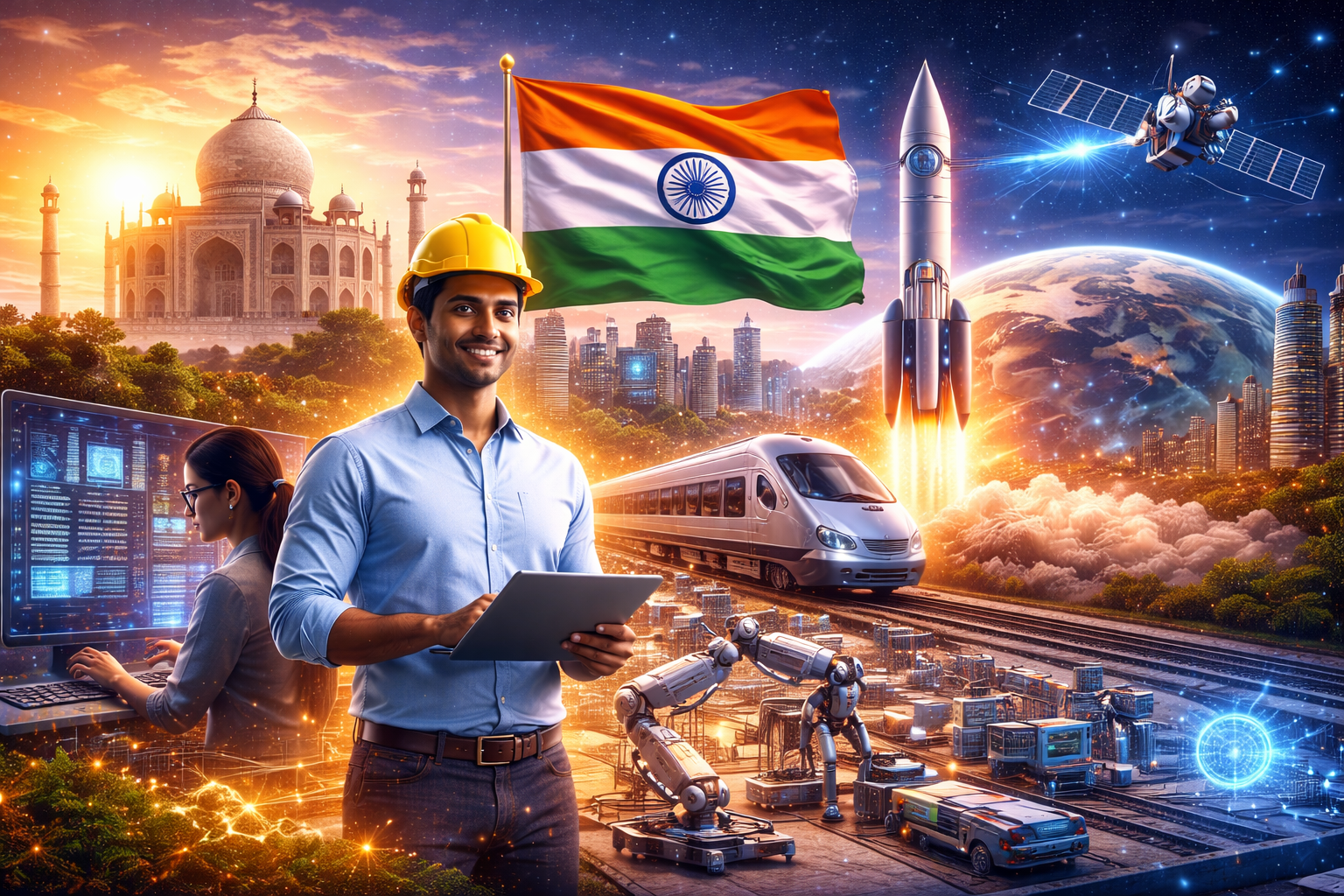
    India is rapidly emerging as one of the world’s most dynamic innovation hubs, positioning itself as the next global powerhouse of technology, entrepreneurship, and industrial growth. With a unique combination of a young workforce, digital adoption at scale, and strong policy support, India is no longer just a consumer market—it is becoming a global creator of ideas, solutions, and technologies.

    Over the past decade, India’s startup ecosystem has witnessed explosive growth. From fintech and e-commerce to artificial intelligence and deep tech, Indian startups are solving problems not just for domestic markets but for the world. The rise of unicorns across sectors highlights India’s ability to innovate at scale, driven by affordability, efficiency, and frugal engineering—often referred to as “innovation with impact.”

    Government-led initiatives have played a crucial role in accelerating this transformation. Programmes such as Digital India, Startup India, and Make in India have strengthened digital infrastructure, encouraged entrepreneurship, and boosted advanced manufacturing. These initiatives have helped India move up the global value chain, especially in electronics, renewable energy, defence manufacturing, and semiconductors.

    Technology has become the backbone of India’s innovation story. Widespread internet penetration, affordable data, and digital public infrastructure have enabled breakthroughs in digital payments, governance, healthcare, and education. India’s digital platforms are now studied globally as models for inclusive and scalable innovation, demonstrating how technology can reach billions efficiently.

    India is also making its mark in frontier sectors such as space technology, biotechnology, and clean energy. Low-cost space missions, advances in vaccine development, and rapid expansion of renewable energy capacity showcase India’s ability to compete with established global powers while maintaining cost efficiency. These achievements are reshaping global perceptions of India’s technological capabilities.

    Equally important is India’s demographic advantage. With one of the youngest populations in the world, the country is nurturing a generation of innovators, engineers, and entrepreneurs who are globally connected yet deeply aware of local challenges. This blend of global thinking and local problem-solving is driving innovations that are scalable, sustainable, and socially relevant.

    In the global economic landscape, innovation in India is no longer an emerging trend—it is a defining force. As investment flows increase and Indian companies expand internationally, the country is set to play a central role in shaping the future of technology, manufacturing, and digital economies.

    Final Perspective

    Innovation in India: The Next Global Powerhouse is not just a narrative—it is a reality unfolding in real time. With strong fundamentals, visionary leadership, and a culture of resilience and creativity, India is poised to become one of the most influential innovation-driven economies of the 21st century.

  • Top Innovators Under 40: Young Leaders Shaping the Future of Technology and Business

    Top Innovators Under 40: Young Leaders Shaping the Future of Technology and Business

    Top Innovators Under 40: The world’s most transformative ideas are increasingly coming from leaders who haven’t yet turned 40. These innovators under 40 are redefining industries, challenging legacy systems, and building solutions for a rapidly changing global economy. From technology and artificial intelligence to healthcare, sustainability, and finance, this new generation of innovators is proving that age is no barrier to global impact.

    What sets innovators under 40 apart is their ability to combine technology, speed, and purpose. Having grown up in a digital-first world, they instinctively understand platforms, data, and global connectivity. Many of them are founders of startups that scale at unprecedented speed, while others are leading innovation within established organizations, driving change from the inside.

    In technology, young innovators are pushing the boundaries of artificial intelligence, automation, and software development. Their work is transforming how businesses operate, how data is used, and how decisions are made. In healthcare and biotechnology, innovators under 40 are accelerating breakthroughs in diagnostics, personalized medicine, and digital health—making care more accessible and efficient. Meanwhile, in climate and sustainability, young leaders are developing clean energy solutions, carbon reduction technologies, and circular economy models to address one of the world’s most urgent challenges.

    Read more: Self-Made vs Inherited Billionaires: Two Paths to Extreme Wealth

    Entrepreneurship plays a central role in the rise of innovators under 40. Many have built companies from the ground up, often starting with little more than an idea and a laptop. Venture capital, global networks, and digital platforms have enabled these innovators to reach international markets faster than ever before. At the same time, social impact has become a defining theme—profit and purpose increasingly go hand in hand.

    Beyond startups, innovators under 40 are influencing policy, education, and culture. They are reshaping how people work, learn, communicate, and consume information. Their leadership styles tend to emphasize agility, collaboration, and long-term thinking, reflecting the demands of a complex, interconnected world.

    Ultimately, innovators under 40 represent the future of global leadership. Their ideas are not just incremental improvements—they are bold reimaginings of what’s possible. As their influence continues to grow, these young visionaries will play a decisive role in shaping economies, societies, and technologies for decades to come.

  • Breakthrough Technologies to Watch This Year: Innovations Shaping the Future

    Breakthrough Technologies to Watch This Year: Innovations Shaping the Future

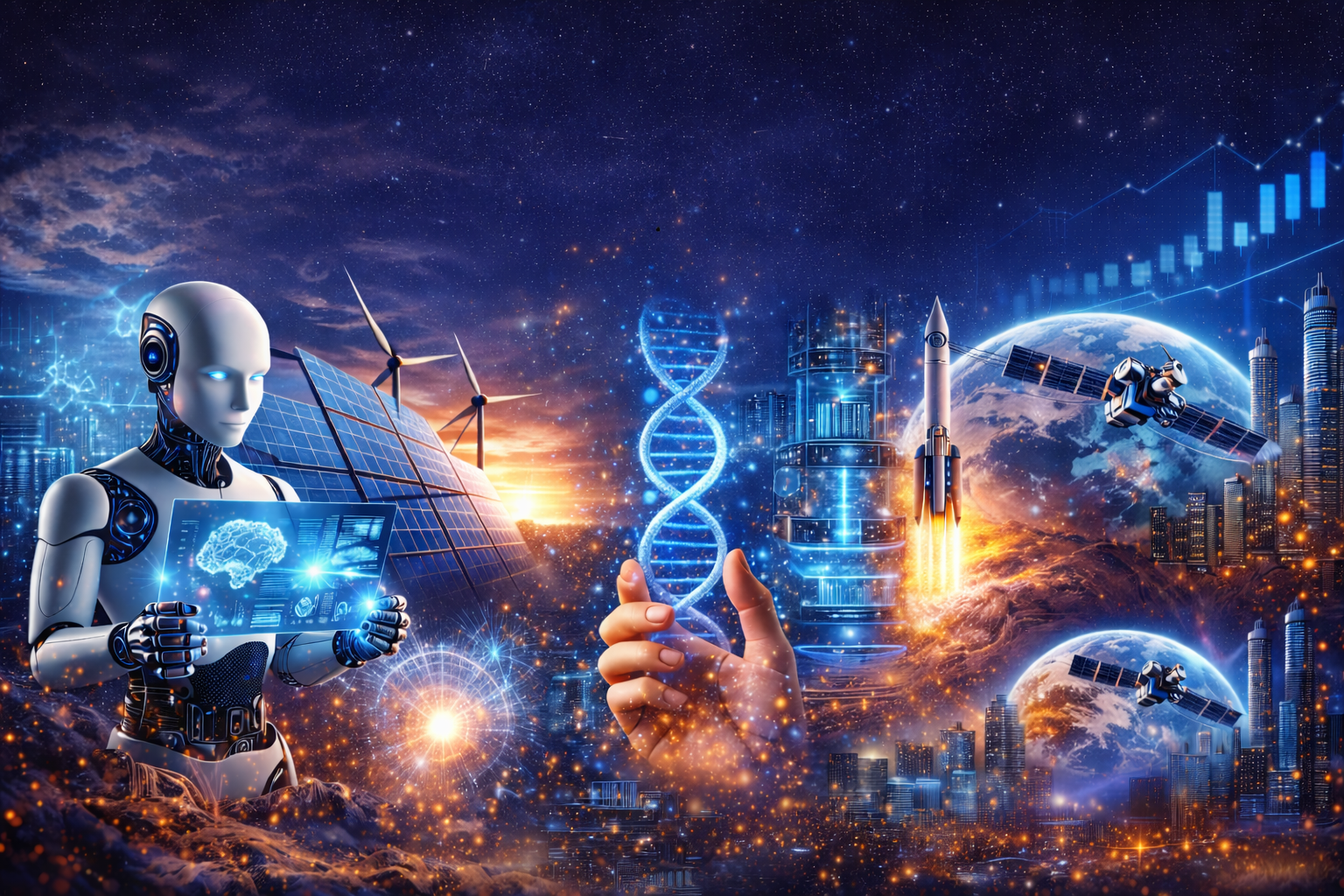
    Breakthrough Technologies to Watch This Year:This year is shaping up to be a defining moment for technological progress. From artificial intelligence and clean energy to biotechnology and space exploration, breakthrough technologies are rapidly moving from research labs into real-world applications. These innovations are not just improving efficiency—they are transforming industries, reshaping economies, and redefining how society functions.

    Artificial Intelligence Goes Mainstream

    Artificial Intelligence continues to be the most disruptive technology of the decade. This year, AI is moving beyond experimentation into large-scale adoption across healthcare, finance, education, and manufacturing. Generative AI, predictive analytics, and autonomous systems are enabling faster decision-making, cost reduction, and entirely new business models. As AI becomes more accessible, its impact on productivity and innovation is accelerating globally.

    Clean Energy & Next-Gen Batteries

    The push toward sustainability is driving major breakthroughs in renewable energy and energy storage. Advances in solar efficiency, wind technology, and next-generation batteries are making clean energy more reliable and affordable. Solid-state batteries and long-duration energy storage systems are expected to transform electric vehicles and power grids, supporting the global transition to low-carbon economies.

    Biotechnology & Precision Medicine

    Biotechnology is entering a golden era. Breakthroughs in gene editing, personalized medicine, and AI-powered drug discovery are revolutionizing healthcare. This year, precision medicine is becoming more targeted, allowing treatments to be tailored to individual genetic profiles. These technologies promise faster cures, improved diagnostics, and better disease prevention.

    Quantum Computing Breakthroughs

    Quantum computing is moving closer to real-world application. While still in early stages, recent breakthroughs suggest quantum systems could soon solve complex problems beyond the reach of traditional computers. Industries such as cybersecurity, pharmaceuticals, logistics, and financial modeling stand to benefit from quantum-powered processing capabilities.

    Read more- Self-Made vs Inherited Billionaires: Two Paths to Extreme Wealth

    Space Technology & Satellite Innovation

    Space technology is no longer limited to government agencies. Private-sector innovation is driving breakthroughs in satellite communications, Earth observation, and space exploration. This year, low-orbit satellites are improving global internet access, climate monitoring, and disaster response, making space-based technology an essential part of modern infrastructure.

    Smart Automation & Robotics

    Advanced robotics and intelligent automation are transforming manufacturing, logistics, and healthcare. This year’s breakthroughs focus on collaborative robots, AI-driven machines, and autonomous systems that can work safely alongside humans. These technologies are addressing labour shortages while increasing efficiency and precision.

    Financial Technology & Digital Assets

    Fintech innovation continues to reshape the global financial system. Digital payments, blockchain applications, and decentralized finance platforms are expanding access to financial services. This year, regulatory clarity and enterprise adoption are expected to drive more secure and scalable fintech solutions worldwide.

    Why These Breakthrough Technologies Matter

    What connects all these breakthroughs is their real-world impact. They are solving global challenges—climate change, healthcare access, digital inclusion, and economic efficiency—while creating new opportunities for growth and innovation. Businesses that adapt early will gain a competitive edge, while societies that embrace these technologies stand to benefit from long-term progress.

    Final Take

    The breakthrough technologies to watch this year signal a future defined by intelligence, sustainability, and connectivity. As these innovations mature, they will not only disrupt existing industries but also create entirely new ones. Keeping an eye on these technologies isn’t just about staying informed—it’s about understanding where the world is headed next.

  • The Brands Building the Future: One Innovation at a Time

    The Brands Building the Future: One Innovation at a Time

    In a world defined by rapid technological change, innovation has become the ultimate competitive edge. The companies leading the innovation race are not only disrupting traditional industries but also shaping the future of technology, sustainability, and global growth. Through bold investments in research, artificial intelligence, clean energy, and next-generation infrastructure, these organizations are setting new benchmarks for what’s possible.

    Among the most influential innovators is Apple, whose ability to blend design, technology, and ecosystem-driven products continues to redefine consumer expectations. Its focus on seamless user experience keeps it at the forefront of smartphones, wearables, and digital services.

    Google remains a silent powerhouse behind much of the modern internet. From AI-driven search and cloud computing to breakthroughs in machine learning, its innovations influence how information is accessed and processed worldwide.

    In sustainable mobility and clean energy, Tesla is accelerating the global shift toward electric transportation. Its advances in battery technology, autonomous driving, and energy storage are redefining the future of mobility.

    E-commerce and cloud innovation are dominated by Amazon, whose investments in automation, logistics, and artificial intelligence continue to reshape how the world shops and how businesses scale digitally.

    Meanwhile, Microsoft has emerged as a leader in enterprise innovation, cloud infrastructure, and AI integration. Its focus on productivity, security, and responsible AI is driving digital transformation across industries.

    Pushing the boundaries beyond Earth is SpaceX, which has revolutionized aerospace technology through reusable rockets and satellite-based global internet connectivity, making space more accessible than ever before.

    What connects these companies leading the innovation race is a shared mindset—long-term vision, high-risk experimentation, and relentless focus on the future. Their impact extends far beyond profits, influencing global economies, sustainability goals, and the way people live and work.

    As innovation accelerates, these companies are not just adapting to change—they are creating it.